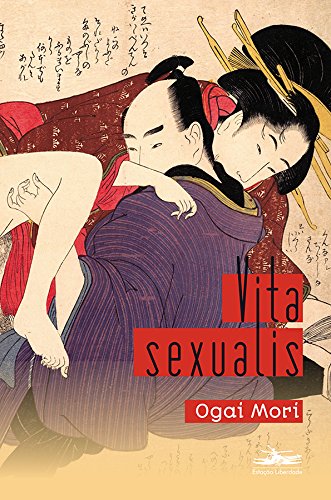
Vita Sexualis, latin for sexual life, is anything but a steamy romance. As an anti-naturalist I-novel, Ogai’s book is semi-autobiographical, and as such his life becomes the template for the main character Shizuka Kanai, a philosopher. Intrigued by how recent literary trends in Japan and the latest European psychological theories seem centered around ...
read more
Vita Sexualis, latin for sexual life, is anything but a steamy romance. As an anti-naturalist I-novel, Ogai’s book is semi-autobiographical, and as such his life becomes the template for the main character Shizuka Kanai, a philosopher. Intrigued by how recent literary trends in Japan and the latest European psychological theories seem centered around sexual desire, Kanai resolves to write an autobiography centered around his own sexual experiences to understand his lack of sexual desire. Taking us through his life starting from when he was six to when he was twenty-one, he provides frank, prudish, sometimes hilarious observations about the role pornography, prostitution, and homosexuality play in not only his own life, but the lives of his friends, Hanyu, Koga, Eiichi, and Kojima in Meiji-era Japan. Kanai’s willingness to question what others are not willing to, and his studious bookishness make him my favorite character, but others could easily see him as pedantic and lacking charisma.
Although Mr. Kanai was my favorite character, as a female living in the West in the 21st century, it was hard to relate to him on several levels. Therefore, when I could relate to him, it was even more special. For example, in the coming of age process that Shizu goes through, he goes from not understanding pornography to, by the age of thirteen, understanding that rape is a fact of life, and a risk he must undertake to attend school. The way in which Shizu stumbles upon these hard realizations, not meaning to, and then attempts to maintain his own innocence for so long is something I think many can relate to, and part of what makes the book enjoyable. Others might complain that this makes the story not match its title. While some might claim the plot is quite lifeless and disappointing due to the lack of scandal in Shizu/Ogai’s life, I would argue they need to look deeper.
In fact, my favorite parts of the book, are when Mr. Kanai becomes Mr. Ogai, the author, or rather, when the thin veil separating character and author is pierced by Kanai’s criticisms of a previous work of Ogai’s, for example. This aspect of the novel adds a layer of humor to the story and brings the reader closer to the author, as if they shared some secret. I often laughed out loud reading this novel, especially when Ogai blatantly used Kanai to push forward his own opinions and critiques of the literary scene at the time (or comment on more ‘low-brow’ literature). It was the meta-quality of the novel, the sense that there is more to the story than meets the eye, that sold me on it.
Despite my personal affection for this novel, I would not recommend this book to just anyone. The fact that this novel is set in Meiji-era Japan alone is likely to be daunting for many, and those looking for a casual, or light-hearted read should look elsewhere. Although there are several humorous moments in the novel, the ending is not straightforward, the constant references to European philosophers and the Japanese literary scene can be off-putting, and Mr. Kanai is pretty passive for a main character. However, those that want to catch a glimpse of daily life in a modernizing Japan and are ready to read between the lines of the text should go ahead. The rich depictions of school life, the impact of the pleasure quarters in Tokyo on young boys, and the changing ideas and philosophies surrounding love and marriage of the time are as informative as they are enjoyable to read. If I had to, I would rate this book four out of five stars.