The Freedom of Seclusion
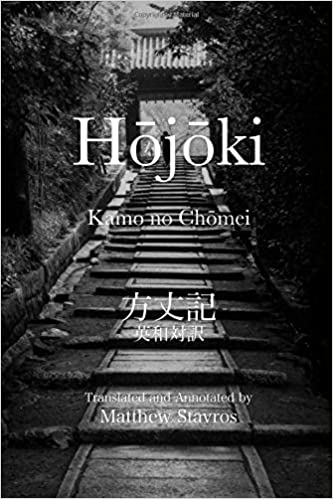
Recluse literature rose to popularity during the late Heian and early Kamakura periods as the result of numerous aristocrats desiring an escape from their daily responsibilities and the material world in general. As they retreated far from the cities, this writing style grew to encompass reflections upon nature and oneself. The author of An Account of a Ten-Foot Square Hut, Kamo No Chomei, was one such aristocrat who desired a secluded life. It was rumored that Chomei wrote this account in 1212 after he was rejected from a position at a prominent shrine. Following the general style of reclusive literature, the Account of a Ten-Foot Square Hut provides readers with a comparison between the sadness found in the material world and the tranquility found in the absence of material attachments. Chomei is able to give such a comparison through depictions of a variety of natural disasters that struck the capital city and a depiction of his life outside of the city, away from material attachments. Through scenes of destruction, loss, pain, and tranquility/simplicity, Chomei plays the role of a teacher by providing his readers with not only a demonstration of the downsides of attachments to the material world and the benefits of relinquishing such attachments, but also with thought provoking life advice.
Although my knowledge of reclusive literature in the late Heian period is at an introductory level, I greatly enjoyed reading Chomei’s work. His depiction of the destruction left by the various natural disasters, in contrast with the simplicity and peace of his current life, made his views on the material and reclusive lifestyles readily apparent. I also felt that such powerful writing kept his readers engaged long enough to listen to his life views. Each natural disaster offers a unique view on life and the material world, but I will focus on two specific examples in order to preserve the rest of the text for future readers. At the onset of his account, he describes the havoc brought upon the capital by a large fire. He notes, “Thousands of men and women died… All human endeavors are foolish, spending one’s fortune and troubling one’s mind to build a house in such a dangerous capital is particularly vain”. In this inclusion, Chomei gives both life advice and a demonstration of a downside of forming attachments to the material world. Chomei utilizes this section to argue that forming material attachments could cost you your life, which allows readers to question their current lifestyle and consider adopting a safer, more secluded one. In this argument, he advises his readers to spend their hard-earned fortunes to preserve each precious moment life has to offer should they decide to maintain material lifestyles.
Chomei continues with writing about the devastation in the capital caused by a two-year famine. After some brief background on the event, he writes “In the end, well dressed men went intently begging house to house”. Such writing suggests to Chomei’s readers the futility of forming material attachments. Inevitably, nature will reclaim one’s possessions and in doing so will invalidate the years of life given up to attain such possessions. Chomei asks his readers to consider why they place such value on material possessions, when the contents of the natural world will give them the same, if not greater fulfillment and pleasure. In this section on famine, he also offers his readers unique advice pertaining to intimate relationships in saying, “Of those who had wives and husbands, the ones whose love was stronger always died first”. Chomei advises his readers to be mindful of the effort they put forth in a relationship as all relationships will come to an end leaving one or both parties emotionally ruined. If such is the nature of relationships, why not spend one’s life seeking serenity in the natural world?
After his depiction of the downsides of the material world, Chomei utilizes scenes from his current lifestyle to emphasize the benefits of reclusion. In his description of his reclusive lifestyle he states, “I rest my body when it is distressed, use it when it feels strong. And though I use it, I do not overwork it”. Here, Chomei stresses the simplicity of a lifestyle void of material desires, and the peace brought by such simplicity. Because he doesn’t have to attend court or raise a family, he is able to truly explore himself and the natural world around him. He argues that a material lifestyle will distract an individual from discovering themselves and the natural world, and therefore prevent them from living a fulfilling life.
I would highly recommend Chomei’s Account of a Ten-Foot Square Hut if you are looking to ponder your own lifestyle in an age where the material world is constantly being pressed upon us. His essay not only contrasts the material and secluded lifestyles, but also provides his readers with unique life advice. During the reading, I found myself questioning whether the life I currently envision living is one that will maximize my fleeting time here on Earth, and one that will bring me the most fulfillment. If I were to rate this work out of 10, I would assign it a 7/10. Although I found it incredibly thought provoking, I wish he hadn’t used as many absolutes. For example, his life advice was interesting but made it seem as if his advice was the only correct advice. If you are looking for a quick and interesting read, An Account of a Ten-Foot Square Hut will be worth your while.
Literature Cited
Shirane, Haruo. “313-324.” Essay. In Traditional Japanese Literature, Abridged Edition: An Anthology, Beginnings to 1600. New York: Columbia University Press, 2012.