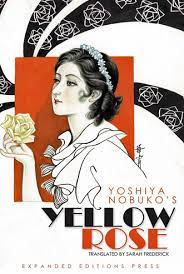
Annotated Bibliography
Dollase, Hiromi Tsuchiya. (2003), Early Twentieth Century Japanese Girls' Magazine Stories: Examining shōjo Voice in Hanamonogatari (Flower Tales). The Journal of Popular Culture, 36: 724-755. https://doi.org/10.1111/1540-5931.00043
This article serves the purpose of educating readers about shōjo culture and stories from early twentieth-century magazines. The establishment of the shōjo genre, which explored feminism and sexuality in the dreamlike realm of girlhood, created a space for girls to unite across cultural and geographical borders and gain power. Unlike boy's magazines, shōjo magazines provided an independent community for young girls that was separate from male standards. Critics, particularly male ones, denounced authors like Yoshiya Nobuko for creating literature they considered to be immature and disgusting. However, the fact that shōjo literature did not submit to male language or standards was precisely the point because reality is dominated by male society. The article highlights the strong escapist mentality that provided a way for girls to resist patriarchal society with tears and emotional expression. The article also discusses lesbian love and female sexuality in shōjo literature and discusses the works and contributions of Yoshiya Nobuko. The work is written for an academic audience that is interested in learning more about shōjo culture. The article is very relevant to the topic of Yellow Rose and Yoshiya Nobuko. One strength of this article is that it features excerpts from shōjo stories so that even if readers have not read the stories before they can become at least somewhat familiar with them enough to understand the content of the article.
Dollase, Hiromi Tsuchiya. “Yoshiya Nobuko’s ‘Yaneura No Nishōjo ’: In Search of Literary Possibilities in ‘shōjo ’ Narratives.” U.S.-Japan Women’s Journal. English Supplement, no. 20/21 (2001): 151–78. http://www.jstor.org/stable/42772176.
The purpose of this article is to discuss Yoshiya Nobuko's story Two Virgins in the Attic. Although the article is not about Yellow Rose, it's relevant because it discusses another one of Yoshiya Nobuko's famous works which readers of Yellow Rose might consider reading next. Sexuality, eroticism, and lesbianism in shōjo literature are discussed as ways for girls to escape the harsh male gaze and the author explains that Yoshiya Nobuko blended feminist ideas into her stories by criticizing patriarchal society. The endings of shōjo stories signify the collapse of the fantasy shōjo world as the characters are forced back into reality as they leave girlhood to become women. The article explains Japanese girl culture and explores what makes literature women's literature. The audience for this article is academics or scholars of Japanese Literature. An interesting feature and strength of this article is that it includes information on Yoshiya Nobuko and her background which may be of interest to her readers.
Friedman, E., 2016. Yuri Studio: A Very Brief History of Yuri by Erica Friedman. [video] Available at: <https://www.youtube.com/watch?v=e8Te2epyC_4> [Accessed 8 April 2022].
This video, which was first presented at the Tokyo Comics Showcase on May 3, 2016, provides a very brief history of 100 years of yuri. It begins by highlighting some of Yoshiya Nobuko's famous works. It then explores the idea of modern girls and girl princes in manga and discusses portrayals of sexuality. The purpose of the video is to inform viewers about the history of yuri and it seems to be targeted toward an audience who is already at least somewhat familiar with the topic. It is relevant because it gives information about Yoshiya Nobuko and how yuri evolved after her publications to become modern-day yuri. A special and unique feature of this video is that the creator is an expert in the field and she provides links to more resources. She also has longer videos that go more in-depth on the topic and include interviews with other experts. One weakness however is that the video is not as visually entertaining as the other videos because it only shows slides with text and images as opposed to anime clips.
Obscura, B., 2018. Queer Japanese TBR | Pride Month + Japanese Lit | 2018. [video] Available at: <https://www.youtube.com/watch?v=8GOB2RM238E> [Accessed 8 April 2022].
This video is by a YouTuber who reviews queer literature, and the purpose of this video is to highlight Japanese queer literature. Throughout the video, the speaker briefly describes stories including, Comrade Loves of the Samarai by Saikaki Ihara, Yellow Rose by Yoshiya Nobuko, My Brother's Husband by Gengoroh Tagame, My Lesbian Experience with Loneliness by Nagata Kabi, Sputnik Sweetheart by Haruki Murakami, Japanese Magnolia by Rei Kimura, The Cage of Zeus of Sayuri Ueda, and Bloom Into You by Nakatani Nio. The video is intended for people interested in reading queer Japanese literature and it's relevant because it talks specifically about Yellow Rose and Yoshiya Nobuko. The main weakness of this video is that not much information is given about Yoshiya Nobuko as it mostly focuses on giving brief overviews of the 8 novels, so the entire video is not necessarily relevant unless viewers are looking for other stories like Yellow Rose.
Suzuki, Michiko. “Writing Same-Sex Love: Sexology and Literary Representation in Yoshiya Nobuko’s Early Fiction.” The Journal of Asian Studies 65, no. 3 (2006): 575–99. http://www.jstor.org/stable/25076082.
The purpose of this article is to explore same-sex love and sexuality in Yoshiya Nobuko's literary works. The article argues that Yohsiya Nobuko offered new possibilities for understanding lesbian love and Japanese female identity by establishing same-sex love as normal and celebrating female sexuality which was mainly defined in binary terms of deviant or pure. Most relationships between girls were viewed as harmless, but once they became serious relationships they were seen as unnatural and masculine. While Yoshiya Nobuko's stories challenged these ideas the strong prevalence of tragedy in her stories also commented on society's oppressive nature toward women. The article discusses how grammar, writing style, and language style were used to add additional meaning to her work. Yoshiya Nobuko's magazine Black Rose is mentioned and the author claims that Yoshiya Nobuko emphasized same-sex love as "the second path" and defended women's rights to express their sexuality. The article was written for a scholarly audience who is familiar with Japanese literature and culture. One strength of this article is that it contains excerpts from Yoshiya Nobuko's work including Yellow Rose. One weakness is that the article is somewhat repetitive.
Yukari, Fujimoto, and Lucy Fraser. "Where Is My Place in the World?: Early shōjo Manga Portrayals of Lesbianism." Mechademia 9 (2014): 25-42. doi:10.1353/mec.2014.0007.
The purpose of this article is to explore the lack of modern lesbian shōjo manga. The author argues that the decrease in girls' schools may have led to the loss of lesbian love stories, like those published by Yoshiya Nobuko, and that demand for lesbian love stories decreased because lesbianism introduced reality and thus interfered with the fantasy that shōjo manga seeks to create. The article describes various shōjo stories and identifies common phenomenas such as the tendency for lesbian love to end in death, particularly suicide, or the tendency for lesbian love to include sisterhood and shared blood. In contrast to manga that portrays gay men, lesbian relationships face harsher judgment from society. The article is relevant because it talks about lesbian love and Yoshiya Nobuko. The audience for this article is people who are familiar with Japanese literature and shōjo manga. One strength or unique feature of this article is that it features the cover art for various shōjo manga.
Zeria, 2018. Industrialization, Girls' Schools, and the Birth of the Yuri Genre. [video] Available at: <https://www.youtube.com/watch?v=lHOFQxfIpwc> [Accessed 8 April 2022].
This video seeks to summarize yuri, explain common tropes in the genre, and illustrate how elements from the pre-war period created the basis for yuri. It explains the historical background of yuri and the rise of shōjo novels. It is a very relevant source because it talks about Yoshiya Nobuko and her significance in the genre and even calls her the grandmother of yuri and shōjo manga. It gives an overview of Yellow Rose as well as some of her other works. The video concludes by focusing on yuri writings of the 20th century and authors such as Ikeda Riyoko and Yamagishi Ryoko. The video is intended for a beginner audience that is curious to learn more about yuri. Something special that I enjoyed about the video is the mix of anime with historical photos and videos. The main strength of this video is that it is very accessible and comprehensive as well as visually entertaining.