Residues of Squalor

Ota Yoko


A Message to the Western World: Residues of Squalor
efelix@middlebury.edu
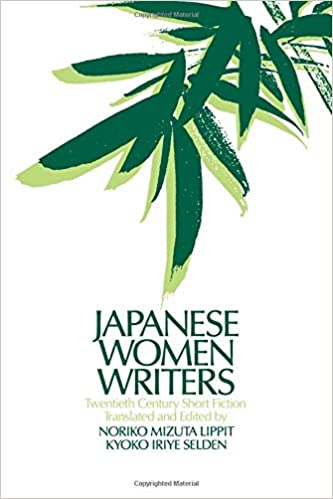
Note: “Residues of Squalor” is a fictional short story based on real events that Ota Yoko went through after the Hiroshima bombing. “Residues of Squalor” is part of Japanese Women Writers: Twentieth Century Short Fiction In Ota Yoko’s “Residues of Squalor”, we follow the story of a woman navigating life in post-WWII Japan. Ota’s main ... read more

Note: “Residues of Squalor” is a fictional short story based on real events that Ota Yoko went through after the Hiroshima bombing. “Residues of Squalor” is part of Japanese Women Writers: Twentieth Century Short Fiction

In Ota Yoko’s “Residues of Squalor”, we follow the story of a woman navigating life in post-WWII Japan. Ota’s main character suffers from trauma because she is a Hiroshima atomic bomb survivor. The use of slugs and salt in this short story is an analog to the Hiroshima atomic bomb survivors. This analogy helps to visually demonstrate the agony and pain left by the atomic bomb that is otherwise inexplicable through writing. In “Residues of Squalor” Ota offers a short story that asks the reader to think more critically about the justification for dropping the atomic bomb to end a war. In fact, there is a sharp critique of J. R. Oppenheimer’s decision to convince the US president to drop the atomic bomb. Western audiences are familiar with the atrocities committed by the Nazis to the Jewish people, but within that same time frame, the subject of the atomic bomb to the West has always been a point of glory. A glory that should not exist because it traumatized innocent people who were caught in the crossfire. While there is no method by which sympathizers can truly understand the trauma and life events left by the atomic bomb dropping on Hiroshima, Ota’s point in this short story is to bring a human element and therefore connection to those reading her work.

“Residues of Squalor” is no happy short story it is quite the opposite. As we follow the main character we come across tales of passionate love and protective mothers. “Residues of Squalor” tells the aftermath of the atomic bomb dropping but also brings into light the experience of Japanese women. Japanese women who are navigating life in post-WWII Japan. This perspective is much different than work before post-WWII Japan because this piece is sincere and honest about the pain and suffering endured by women survivors.
Ota’s short story makes the reader feel how a slug affected by salt feels ---a sense of a squirming, never-ending pain is visualized and therefore felt. This is where “Residues of Squalor” places the reader. The result is that Western audiences who once saw the atomic bomb droppings as glory come to question these beliefs.

For this reason, I enjoyed Ota’s short story so much. Raised in a family where US history was untouchable, I never batted an eye at the atomic bomb. As a physicist, I was in awe of the mere science that this weapon was made of. Only after reading Richard Feynman’s Surely You’re Joking, Mr. Feynman! did I come to realize that the Manhattan Project was a mistake. The sheer destructive power of both atomic bombs, one stronger than the other was horrifying. The purpose of making such a weapon was also disgusting and the pain of the people who experienced its destruction would never heal. They say time heals all wounds, but that is not true, if I have learned anything from reading Ota’s Residue of Squalor it is that the US handed out a huge injustice to innocent people caught in the crossfire of the war.

“Residues of Squalor” is a short story every Westerner should read. There serves no purpose in ranking a short story depicting the struggles of victims of an atrocious event. Instead, I ask that the Western world open their hearts and come to understand the pain left by the atomic bomb.

Total Votes : 0 Vote Up Edit Reply

Natural Elements as a Reflection of Emotion
cetrillard@middlebury.edu
Natural elements have the power to spark an emotional connection between sensory and literary expression, illustrating indescribable emotions. A recognizable medium, evoking a variety of emotional sensations, environmental descriptors in literature fosters a closer connection between the reader and author. In her short story Residues of Squalor, Ota Yoko reflects on a dark period of ... read more

Natural elements have the power to spark an emotional connection between sensory and literary expression, illustrating indescribable emotions. A recognizable medium, evoking a variety of emotional sensations, environmental descriptors in literature fosters a closer connection between the reader and author. In her short story Residues of Squalor, Ota Yoko reflects on a dark period of her life seven years after the Hiroshima and Nagasaki bombings that ended WWII using environmental motifs of rain and slugs to convey her message of endless trauma and depression.

Ota introduces her text with an illustration of a shed in the middle of a rainstorm and continues to depict scenes with a variety of water elements throughout her writing. Ota utilizes rainstorms as a means of illustrating the perpetual grief she and her surviving neighbors experience in their daily lives. The second environmental motif Ota employs is slugs, which she describes creeping all throughout her house, keeping her mother awake. Not only do slugs give the impression of discomfort, but Ota represents them as the soldiers who died in the bombings. Their persistence is a reminder of the tragedy of the bombings, trapping Ota in the past. Ota attempts to phase these reminders by using salt and DDT to melt the slugs, but when she realizes their connection to the soldiers, she gains empathy for the slugs and leaves them alone.

Despite not having a shared experience, Ota’s use of natural elements in her writing helped me understand what was going on inside her mind, which was key to my enjoyment of this text. I can’t say that I relate to Ota, but the way in which she was reminded of her trauma through triggers like slugs is something I find myself doing, which allowed me to empathize with her. My favorite part of this text was when she discussed her anger towards the initiators of the bombing, stating, “How long will they continue to believe that their discovery and deep knowledge of atomic power have embellished a brilliant page in human history?” (Yoko, 77). It was interesting to read other sides of her trauma, not just her depression and grief, but her profound anger.

I would recommend this piece as it is a captivating lens into a Hiroshima bombing survivor’s experience and the lasting impacts of this event on their lives. I would especially recommend this reading to anyone who is currently studying WWII. I would have appreciated reading this text in my AP US History course my junior year of high school, for example. This text, however, requires a more mature audience as there are mentions of suicide and substance abuse, which could be difficult for younger audiences. One critique is that Ota tends to go on long tangents throughout the reading which I find distract from the focus of her text. Therefore, I would rate this text an eight out of ten. 

Total Votes : 0 Vote Up Edit Reply

Fallout Forget-Me-Nots
swittig@middlebury.edu
Moved and speechless are two of the many words that could describe the reader after having digested Ota Yoko’s “Residue of Squalor.”  Being a survivor of the August 6th bombing of Hiroshima herself and compiling first-hand stories from others, Ota walks her readers through the life of a woman grappling with depression, confusion, pain, and ... read more

Moved and speechless are two of the many words that could describe the reader after having digested Ota Yoko’s “Residue of Squalor.”  Being a survivor of the August 6th bombing of Hiroshima herself and compiling first-hand stories from others, Ota walks her readers through the life of a woman grappling with depression, confusion, pain, and sorrow living in Tokyo, still rebuilding itself from the fires, just seven years after the tragedies.  She highlights a mother’s futile attempts to keep her family safe from ever lurking darkness and explores the complexity of relationships between those who passed that day, those still living, and those somewhere in between.  Ota also pulls at the reader's heart strings by revealing the gruesome truth of maim and massacre the people of Japan faced, many of which without a clue as to why, while simultaneously making eloquent commentary on morality- or lack thereof- of those part at blame for causing such desolation. 

Her work reveals the pain and suffering of the survivors as they attempt to rebuild their lives and their city atop rubble and ruin, some without even knowing if their loved ones survived.  Yet still, the story is speckled with glimmers of hope, showing just how resilient the Japanese community is.  Ota skillfully weaves in remarkable stories of strength, courage, and selflessness, through the seemingly ordinary people the narrator encounters, unveiling the unsung heroes of their community.  Furthermore, she sheds light on the ways in which towns still came together to wish for peace and resolution during the annual Tanabata or ‘star festival’ celebration as the tension strung on. 

“Residue of Squalor” is a must-read work for anyone hoping to gain insight into an important perspective wholly absent from any western nation produced literature on the realities of World War II in Japan.  Not only is it a literary triumph, but Ota’s work is a raw and real depiction of the abuse the Japanese suffered and the trauma many are still confronted with that deserves to be read and heard across the globe.  It takes tremendous courage to be able to put these heart wrenching sentiments on paper for the world to read, but even despite her understandably depressed state, Ota delivers a tactful reminder that the dead and the living alike deserve their agony to be heard before they can truly heal.

Total Votes : 0 Vote Up Edit Reply

Tragedy and Accountability: A “Residues of Squalor” Book Review
rurbina@middlebury.edu
Citation: Ota Yoko, Residues of Squalor. In Japanese Women Writers: Twentieth Century Short Fiction, by Noriko Mizuta, 58-83. New York: M. E. Sharpe, 1991.   The sight of a slug burning and melting has the reader vividly recount the experiences that atomic bomb victims suffered. While we can never feel the same emotions and the ... read more

Citation:

Ota Yoko, Residues of Squalor. In Japanese Women Writers: Twentieth Century Short Fiction, by Noriko Mizuta, 58-83. New York: M. E. Sharpe, 1991.


The sight of a slug burning and melting has the reader vividly recount the experiences that atomic bomb victims suffered. While we can never feel the same emotions and the fears that a-bomb victims went through in the moments leading up to and after the tragedy, Ota Yoko (1991) gives us a glimpse of what she felt. Despite "Residues of Squalor" being a symbolic story of the atomic bombs and its recount of tragic moments, it is a must-read story for readers that are willing to face the destruction that humanity has imposed on itself. 

In my personal opinion, "Residues of Squalor" is a must-read story of tragedy and accountability. It tells a story of a family stuck on a ramshackle shed in a town that has rotted to its core. A place that was breeding with slugs, sliding through the mudded floorboards. Ota Yoko describes to us the horrors of the atomic bombs on Hiroshima  (1945) and the lasting impact it had on its victims through the actions of one women and a pile of slugs. Through half-hazard, primitive methods, the girl decides to use a non-lethal way to contain the slugs, but as she sees the harm that is caused, she resorts to DDT, which had unexpected consequences, not to the reader, but to the character. 

We see the accountability of the character and what they represent in real life as a result

of using a pesticide on a living animal. There are tangible outcomes to the destruction of a living thing, and through the actions of the girl, we see the emotional effects present in Japan today. 

I recommend this story, not for its vivid imagery, which is a plus, but for its realistic interpretation of the emotions of a victim turned survivor and for its inclusion of ideas such as survivor's guilt and post-traumatic stress disorder. Despite recommending this title, as I read through the story, I couldn't help but get goosebumps and feel uncomfortable as I interpreted the metaphor of burning slugs. While the emotions I felt were brutal, I think that it was necessary in order for Ota to make the reader understand the brutality of the bombs. 

Knowing all I know about Ota Yoko herself, her history, and her coping through writing, and as I read this literary work, I realized that it is not a story for everyone. It is a story for those that are ready to hear about the catastrophic effects that the atomic bombs had on Hiroshima. And while this might sound counterintuitive to my last statement, I think this story should be taught to all, not for the narrative, but for the lesson on the aftermath of the atomic bombs. All in all, if I were to give this reading a score, I would give it four stars. A story that I enjoy and think has current relevance but could do a better part in keeping a reader with no prior interest engaged.
Total Votes : 0 Vote Up Edit Reply


efelix@middlebury.edu
Ota's slug comparison to the a-bomb dropping on Hiroshima is a very powerful one. In what ways is Ota's slug comparison visualized with relation to the atomic bomb survivors in Residues of Squalor?

jenglish@middlebury.edu
In both Masks of Whatchamacallit and Residues of Squalor we witness great degrees of callousness or outright discrimination toward the hibakusha. What effect does this criticism and discrimination have on the hibakusha readings we did?

zhengqianl@middlebury.edu
The narrative never zooms out and review the true political reasons for the dropping of the A-bomb, but stays in the psychological and traumatic experience on the personal level. This trait seems to suggest that the narrator adopts a mentality that sees Japan as the victim and the US as the perpetrator. That being the case, I'm wondering if the militarist education plays any role in perpetuating such a mentality?

ejkim@middlebury.edu
I thought it was really interesting that the narrator played two "roles" — one as a victim of the bombing living in the aftermath of such an atrocity, and the other being the attacker regarding the killing of the slugs that were referred to as "innocent." What is the author's purpose of showing these polar opposite roles of the narrator? Also, after reading A-bomb literature written by both male and female authors, how do male Japanese writers narrate their experiences differently than female writers? Is the experience of the A-bomb "gendered"?

xiyaoh@middlebury.edu
The slug metaphor plays a dominant role in the story. What does the family's different attitudes toward slugs suggest about human nature? Consider the narrator's mother and sister who ruthlessly kill them and the narrator who empathizes with them--does it imply that the victims could also exert violence on the weaker, and is there an extension of the central binary of Asiatic and the Western world during the war time?

cdramos@middlebury.edu
How do the clay dolls in Masks of Whatchamacallit and the slugs in Residues of Squalor compare? Do they symbolize similar things/create a similar atmosphere?

mkemmer@middlebury.edu
What metaphorical purpose do the slugs serve in the narrative of Residues of Squalor?

swittig@middlebury.edu
Though minute in the overall storyline, I thought it was interesting that Ota added the details about the men planting the trees.  Particularly that they wouldn't reach their full form until after their lifetime, and that the old man was half-crying and half-laughing.  I feel like both these details portray different sentiments in the aftermath of the bomb.  The first being the need to care for future generations and preserving what was lost (also evidenced by the mother's undying attempts to control the slugs for her family's sake).   The second being sheer bewilderment at the fact that such a cruel and brutal attack could be made on so many innocent people.  I would be curios to hear other's ideas on where else in the story these indirect notes on the sentiments at the time can be seen.


rurbina@middlebury.edu
Daily Question 3/7: I have a pretty similar question to this. Knowing that her work as an A-bomb writer was not fully published until years after it was wrote, how did Ota's work influence the conversations going on during that time.

mmflores@middlebury.edu
The guilt Wakako felt and the rumor of Yoko affected her until her death. The use of maggots gave readers vivid imaginations of how the guilt plagued Wakako. For example, the scene where Yoko told Wakako not to kill the maggot because it is her made me shiver. I am curious to wonder if maggots were used to represent more than just Yoko? For example, were the maggots used to portray the aftermath of the bomb in the form of a maggot turning into a fly?


efelix@middlebury.edu

Treat, John Whittier. "Hiroshima and the Place of the Narrator." The Journal of Asian Studies 48, no. 1 (1989): 29-49. Accessed December 13, 2020. doi:10.2307/2057663.

In this paper Professor Treat discusses the reasons why Ota Yoko has many works relating to the Hiroshima atomic bombing. Treat posits that Ota’s struggles and trauma are the reason why she must write about the bombing. Treat suggests that this is the nature of authors who have experienced trauma. How do these authors begin to explain their trauma to an audience ready to understand their trauma? As readers how do we come to understand the implications of “Residues of Squalor?” How does Ota Yoko get us there?


efelix@middlebury.edu

Feleppa, Robert. "BLACK RAIN: Reflections on Hiroshima and Nuclear War in Japanese Film." CrossCurrents 54, no. 1 (2004): 106-19. Accessed December 13, 2020. http://www.jstor.org/stable/24460747.

            In this paper Professor Feleppa discusses the spiritual and social dynamics of the experiences highlighted in films involving Hiroshima and Nagasaki. Feleppa suggests that these dynamics are purposeful to teach to American youth as America becomes technologically war-making and aggressive in foreign policy. This paper asks an American audience and more generally each reader to think about the implications of weapons of mass destruction.


efelix@middlebury.edu

HU, TZE-YUE G. "Postwar Japanese Animation Development and Toei Animation Studio." In Frames of Anime: Culture and Image-Building, 77-104. Aberdeen, Hong Kong: Hong Kong University Press, 2010. Accessed December 13, 2020. http://www.jstor.org/stable/j.ctt1xw9xb.12.

Anime Project Home. Accessed December 13, 2020. http://umich.edu/~anime/index.html

The two resources above are related. The first resource focuses on the foundation of Toei Animation Studio. In 1951, Toei Animation Studio was comprised of many atomic bomb survivors who created animations for the purpose of reliving their childhood. Further, Toei Animation Studios released animations filled with robots, mutations, and explorations of the post-apocalyptic world. This second resource discusses the robots, mutations, and explorations of the post-apocalyptic world as they relate to the atomic bomb droppings in Hiroshima and Nagasaki. These resources provide new context for people who are familiar with Japanese animations and are an introduction to how Japanese animation relates to social and cultural events of Japan for those new to these animations.