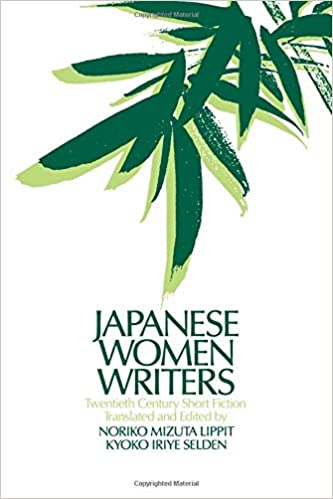
Citation: Ota Yoko, Residues of Squalor. In Japanese Women Writers: Twentieth Century Short Fiction, by Noriko Mizuta, 58-83. New York: M. E. Sharpe, 1991. The sight of a slug burning and melting has the reader vividly recount the experiences that atomic bomb victims suffered. While we can never feel the same emotions and the ...
read more
Citation:
Ota Yoko, Residues of Squalor. In Japanese Women Writers: Twentieth Century Short Fiction, by Noriko Mizuta, 58-83. New York: M. E. Sharpe, 1991.
The sight of a slug burning and melting has the reader vividly recount the experiences that atomic bomb victims suffered. While we can never feel the same emotions and the fears that a-bomb victims went through in the moments leading up to and after the tragedy, Ota Yoko (1991) gives us a glimpse of what she felt. Despite "Residues of Squalor" being a symbolic story of the atomic bombs and its recount of tragic moments, it is a must-read story for readers that are willing to face the destruction that humanity has imposed on itself.
In my personal opinion, "Residues of Squalor" is a must-read story of tragedy and accountability. It tells a story of a family stuck on a ramshackle shed in a town that has rotted to its core. A place that was breeding with slugs, sliding through the mudded floorboards. Ota Yoko describes to us the horrors of the atomic bombs on Hiroshima (1945) and the lasting impact it had on its victims through the actions of one women and a pile of slugs. Through half-hazard, primitive methods, the girl decides to use a non-lethal way to contain the slugs, but as she sees the harm that is caused, she resorts to DDT, which had unexpected consequences, not to the reader, but to the character.
We see the accountability of the character and what they represent in real life as a result
of using a pesticide on a living animal. There are tangible outcomes to the destruction of a living thing, and through the actions of the girl, we see the emotional effects present in Japan today.
I recommend this story, not for its vivid imagery, which is a plus, but for its realistic interpretation of the emotions of a victim turned survivor and for its inclusion of ideas such as survivor's guilt and post-traumatic stress disorder. Despite recommending this title, as I read through the story, I couldn't help but get goosebumps and feel uncomfortable as I interpreted the metaphor of burning slugs. While the emotions I felt were brutal, I think that it was necessary in order for Ota to make the reader understand the brutality of the bombs.
Knowing all I know about Ota Yoko herself, her history, and her coping through writing, and as I read this literary work, I realized that it is not a story for everyone. It is a story for those that are ready to hear about the catastrophic effects that the atomic bombs had on Hiroshima. And while this might sound counterintuitive to my last statement, I think this story should be taught to all, not for the narrative, but for the lesson on the aftermath of the atomic bombs. All in all, if I were to give this reading a score, I would give it four stars. A story that I enjoy and think has current relevance but could do a better part in keeping a reader with no prior interest engaged.