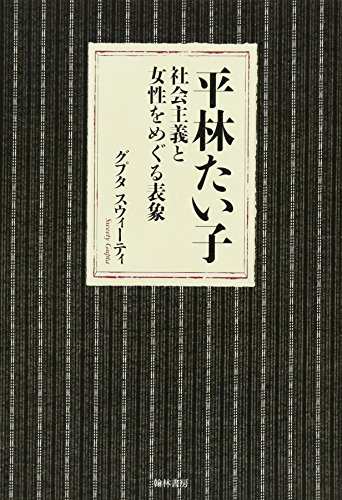
“She described her life in one word – hell” (94). As the protagonist narrates the end of the play unfolding in front of her, these words “[rip] through [her] like a dagger,” and for good reason. “Self-Mockery” (1927), a short story by Japanese author Hirabayashi Taiko, centers around the life of a young woman living ...
read more
“She described her life in one word – hell” (94). As the protagonist narrates the end of the play unfolding in front of her, these words “[rip] through [her] like a dagger,” and for good reason. “Self-Mockery” (1927), a short story by Japanese author Hirabayashi Taiko, centers around the life of a young woman living in misery. With a tragic backstory, a “wretched” man for a husband, and virtually no money, the protagonist Yoshiko leads a bleak life in Tokyo. Told from the first-person perspective, the reader gets an intimate view into the life of this downtrodden woman who feels “adrift in an ocean of fatigue” and “engulfed by a wasteland” (81).
The story begins with Yoshiko’s streetcar ride home. She comes from Yada’s house – a Bourgeois man who she sleeps with for money – and is heading back towards the tiny apartment she shares with her husband Koyama. Her disdain for the men in her life is perhaps only surpassed by her disdain for herself. Yoshiko routinely describes herself as ugly and strange-looking, picking at her “yellow teeth,” “saggy skin,” and stained kimono. She describes men passing her in the street, sneering and “disappointed at what they have just seen.” She even goes so far as to describe it amusing to “offend men” with her “shabbiness and ugliness” (90). Her self-disgust is only amplified by her outcast nature, as she describes herself as a “solid, grey thread” among the vivid colors of the excited Tokyoites she passes on the street (76).
With a husband who writes – then routinely fails to publish – “unsolicited manuscripts,” Yoshiko is the one who must scrounge up money for their survival, namely through her visits to Yada’s house. What is perhaps confounding about this dynamic is that her husband is the one who pushes her to coax money out of the “men [she] had sexual relationships with” (81). Despite being the technical “breadwinner” of this relationship, this dynamic does not serve to empower her in the least. Rather, money becomes her burden because Koyama “looks down on her” as a woman with “many blemishes” that has “no choice but to please her man in whatever way she can” (81). Consequently, she finds herself having to go back to Yada – a man who fills her with disgust and misery – just to get the money to eat.
“Self-Mockery” is thus a refreshingly honest piece from the perspective of a struggling proletarian woman. Yoshiko is disempowered in almost every way – she has resigned to a life of financial instability and lack of bodily autonomy. Yet, her vulnerability amidst her depressing circumstances is coupled with an inspiring resilience, the reason why this protagonist is one to root for. Though her circumstances are grim, her commentary is fresh and entertaining. This short story is a quick read, stuffed with both blunt inner dialogue and the imagery of a grimy and dusty Tokyo. Her hyper-awareness of her surroundings, humorous self-ridicule, and sharp observations contribute to her candid tone throughout the piece.
Though most are fortunate enough not to relate to Yoshiko, that does not mean her story is not worth reading. Literature can serve to expose the perspectives of those that have been cast aside from mainstream history. Hirabayashi Taiko’s writing reveals the lesser-known struggles of poor women during Japan’s early Shōwa period (1926-1989). “Self-Mockery” is honest, unique in perspective, and heavily inspired by Hirabayashi Taiko’s own struggles as a proletarian woman. This is definitely a recommended read – short, easy, and accessible, even for those with little knowledge of Japanese history and culture.