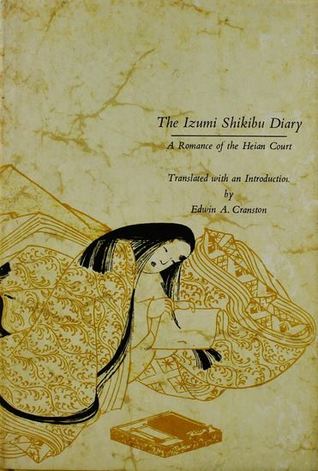
Izumi Shikibu nikki (The Diary of Izumi Shikibu)

Izumi Shikibu


An Embodiment of Heian Court Romance and Poetry
pchase@middlebury.edu
Since the Heian period (794-1185), Izumi Shikibu (c. 978-1033?) has earned and maintained her rightful position as one of Japan’s greatest authors throughout history. Daughter of a provincial governor, Izumi Shikibu was raised in the Court of the Grand Empress in the late 10th-century. After marrying Tachibana no Michisada (?-1016) as a teenager, Izumi Shikibu ... read more

Since the Heian period (794-1185), Izumi Shikibu (c. 978-1033?) has earned and maintained her rightful position as one of Japan’s greatest authors throughout history. Daughter of a provincial governor, Izumi Shikibu was raised in the Court of the Grand Empress in the late 10th-century. After marrying Tachibana no Michisada (?-1016) as a teenager, Izumi Shikibu has an affair with Prince Tametaka (c. 977-1002). The Diary of Izumi Shikibu, written in the early 11th century, offers an account of her life following Prince Tametaka’s death, during which she develops a romantic relationship with his younger brother, Prince Atsumichi (c. 981-1007). Although some scholars doubt whether or not Izumi Shikibu is the real author, most assume that she is and that the protagonist, the “lady,” refers to herself. Throughout the diary, Izumi Shikibu constructs a beautiful representation of the Heian-period romance dominated by poetry while sharing her most intimate thoughts amidst a turbulent, passionate relationship.

Written during the mid-Heian period, the Izumi Shikibu nikki reflects a stylistic technique and structure unique to Heian literature. The term nikki refers to poetic diaries written during this literary period; although there are several exceptions, most nikki were written by female members of the court. The Izumi Shikibu nikki consists of waka poetry woven throughout a third-person narrative. Waka, the traditional Japanese poetry style prominent among Heian courtiers, uses thirty-one syllables distributed into 5/7/5/7/7 arrangements. While the supplementary prose provides the reader with narrative context, waka conveys the characters’ emotions. Composing waka in response to weather, seasonal changes and poetic exchanges illustrates one’s depth of emotional maturity, an apparent custom in the Izumi Shikibu nikki. 

Izumi Shikibu thoughtfully weaves waka poetry within the narrative to express her deepest emotions for Prince Atsumichi. As their relationship develops, her writing reflects a shift from a casual exchange of waka and letters to a more devoted affair. She writes to Prince Atsumichi, “Do you see it, my beloved? / The hour is late, / And there above the mountain crest / Shines limpid, unobscured / The moon of an autumn night” (138). The lady’s reference to the “unobscured moon of an autumn night” represents the clarity and intensity of her love towards the Prince. Although the lovers are in different places, they are connected through the same moon. Relating the moon and other aspects of nature to romantic feelings is a common feature of waka poetry. Izumi Shikibu also incorporates poetry to illustrate more negative emotions, such as sadness, loneliness, and frustration towards Prince Atsumichi. Though deeply devoted to one another, their relationship faces several setbacks. Izumi Shikibu expresses grievance to the Prince by writing, “Pray leave behind at least your image, / Mirrored in my regretful tears, / Though, wearied of my love, / You go away with dying autumn, / Ignorant of my heart” (161). Here, the lady uses poetry to convey her painful emotions as she feels neglected by the Prince. The lines “mirrored in my regretful tears” and “dying autumn” reflect Izumi Shikibu’s precise word choice and poetic talent. Through waka alone, she offers compelling insight into her most intimate thoughts. In this way, Izumi Shikibu epitomizes the emphasis on sentiment and romance that characterizes Heian court literature. 

The Diary of Izumi Shikibu is a captivating embodiment of romance, scandal, and emotional intimacy in 11th-century Japan. Any reader, regardless of their knowledge of Japanese, can enjoy this work. Although not necessary to enjoy Izumi Shikibu’s elegant poetry, a background of her romantic past provides useful context to better understand the nikki. Overall, the author’s poetic talent and meticulous blend of waka and narrative creates a compelling read that I would highly recommend. 

Total Votes : 1 Vote Up Edit Reply

Izumi Shikibu Nikki: Beauty in Tedium
pruffolo@middlebury.edu
The Diary of Izumi Shikibu is undoubtedly a tedious and hollow love story, yet it manages to tell such a story with some of the most beautiful prose possible. It was written early in the eleventh century, likely by Izumi Shikibu herself-though there is some debate on whether this is true. It is believed that ... read more

The Diary of Izumi Shikibu is undoubtedly a tedious and hollow love story, yet it manages to tell such a story with some of the most beautiful prose possible. It was written early in the eleventh century, likely by Izumi Shikibu herself-though there is some debate on whether this is true. It is believed that “the woman” in the story, the protagonist, references Izumi Shikibu, and tells stories drawn from her real life. The diary tells the tale of a former consort of a late prince, presumed to be based on the author, Izumi Shikibu, and her newfound relationship with the younger brother of her former lover. The prince, immediately infatuated with the woman, attempts to court her through romantic waka poetry (an early form of Japanese poetry which comprised of 31 syllables in a 5/7/5/7/7 pattern). Eventually, this effort proves successful, and they begin to meet in secret, despite knowing the social repercussions of the prince beginning an affair with someone of comparatively low rank. Throughout their sporadic relationship, they face torment both from others in the form of gossip, and from each other through jealousy and repeated cat-and-mouse games. They continue with this unhealthy behavior until eventually they are forced to make some difficult decisions on how to proceed with their relationship.

            Izumi Shikibu certainly takes her time explaining the intricacies of the complicated relationship presented in the novel. This leads to a sluggish, tedious pace to the story; it seems as though the two lovers go through endless cycles of falling in love, fighting from jealousy over simple rumors or gossip, then returning to an amorous relationship. By the end of the reading, I had forgotten how many times this cycle had occurred. My frustration with the storytelling culminated in a scene when the prince purposely made his carriage to look as if it was holding female passengers simply to make the woman jealous. Upon reading of this interaction, I was immediately thrown back to my young teenage years, when my classmates would try a plethora of manipulative schemes to see if their crush liked them back. I constantly found myself wishing that I had been reading of a more happy and healthy relationship – it would have made me care a lot more about the eventual end result of the hardships their love faced.

            Thankfully, the narrative of Izumi Shikibu nikki is not the focus of the writing. Despite my dislike towards the story Izumi Shikibu tells, the quality of her waka poetry is unmatched. Luckily, half of the text is made up of these beautiful poems. The love shared between the two protagonists in the story is most convincing when they profess their feelings through intimate, personal poetry secretly sent between each other. One such example occurs when the prince describes his feelings to the woman, writing: “the thoughts of love that I think alone are all in vain; would that you were of the same heart as I.” Though I may have compared the narrative to that of a middle school love drama, that comparison completely falls apart when considering the quality of the poetry sent between the characters.

            Overall, I am glad that I read Izumi Shikibu nikki. The love story, while tedious, is far more realistic and applicable to real relationships – a quality not found in most modern romance tales. Despite the lackluster story, I would recommend this story without hesitation for anyone who appreciates the beauty of poetry. The vernacular of this story, while beautiful, is still simple enough for anyone with decent literary prowess to read and enjoy. After only one reading, it becomes clear why this text was used as a guide for aspiring waka poets in classical Japan. This text has inspired me to explore some of the waka writing from future poets to see how they improved upon and drew from Izumi Shikibu nikki.

Total Votes : 0 Vote Up Edit Reply

A Tale of an Impatient Prince, not a Temptress
mgromero@middlebury.edu
As the words of Cranston, who translated the work, “Izumi Shikibu’s life was one long scandal.” Her personal life (976 A.D. to 1030) story adds dramatic context to her eventful love life at court, where she is known for having affairs with two crowned princes. Her relationship with the first prince, Tametaka, was the court’s ... read more

As the words of Cranston, who translated the work, “Izumi Shikibu’s life was one long scandal.” Her personal life (976 A.D. to 1030) story adds dramatic context to her eventful love life at court, where she is known for having affairs with two crowned princes. Her relationship with the first prince, Tametaka, was the court’s favorite scandal to spread through rumors, which drove her to temporary isolation, being disowned by her parents, and divorce by her husband. Prince Tametaka died at 26 years old, which many fault Izumi as he would go on nightly escapades to meet her. Despite the public knowledge and shame of having an affair with the first prince, Prince Tametaka’s younger brother, Prince Atsumichi pursued her as well. The prince initiated the correspondence while Izumi was in mourning period, where, “he constantly ply[ed] her with verses, and her occasionally sending an answer, in this way lightening a little the listless boredom of her existence (133).”

 In other words, we see the image of the waiting-woman whose skill set in poetry is revealed only until the man shows any interest in courtship, though we do see some authority on her part to ignore or accept his advances. But you can only ignore a prince for so long. Imagine the high school couple that swore they were going to get married, their Instagram posts’ captions being paragraphs of “I love you’s” and so many emojis that it still makes you sick to the stomach thinking about it. All to delete it every other week. Multiply that by 10 and you will get Prince Atsumichi and Izumi's relationship summarized. As much as you and I were annoyed by the “on and off every other week” couple, so were the court officials, who could never blame their prince, oh god never, the fault had to be Izumi who bewitched the first prince and she had come for the next best thing, his younger brother, Atsumichi. The court officials desperately tried to convince their prince to stop seeing her multiple times, so much so that we have historical accounts saved saying so, however, he was infatuated beyond belief. However do not mistake him for being a simp, no, he was a toxic gremlin, who had no prince-like qualities. He radiated such an immense amount of impatience and self-entitlement in their poetry that I cannot stand him. In one poem he would write about how much he would cry and long for Izumi and the next exclaim how he should not have trusted her. The fickleness of his emotions irk me, though Izumi’s lovesickness seems to be blind to it, so while a good read in receiving inspiration for lines to repeat to your partner to have them swoon, the catch is you have to witness two members of the court engaging in an eye-rolling love story that culminates in nothing. After all, as many critics agree, the life of Izumi Shikibu is one long drama, where you assume her to be calculating and cunning in receiving many attempts of affection from a variety of high ranking men of the court, is only rather a talented poet who often cries about being the secret spouse.

 Depending on your account, you might disagree with me in blaming the prince for the wishy-washiness of their relationship and instead counter that Izumi is at fault for her lack of prompt response and attention from other men, which I can understand. Though we can all agree that the page has the worst job of us all, because while we can close the book and question Izumi for continuing the relationship, accepting his requests, or for not choosing to become a devout Buddist, therefore, separating herself from him. As well as malign the prince for all of his actions and disregard the gossip that he caused, but the poor page needs a raise and a new job. I would not put it beyond the page to be concluding with Prince Atsumichi’s court officials in wanting to separate them or feeding into the court’s rumors to put an end to the constant messages. If I was him I would schedule days where I stay at Izumi or the prince’s residence and write the poetry myself, so I would not have to climb mountains every day. I doubt they would notice since he goes to her place every night, I mean that is how he died. If the page felt like it, he could have humiliated the prince by rewriting the prince’s poetry poorly, so it is bold for the prince wanting to fire the page when they exhausted him.  

Throughout the diary, I found myself enjoying the short poetry, because of how sweet and well-intended it seemed and then understood why Izumi fell so hard as she did, though words can only do so much for the reader. Prince Atsumichi’s attitude and insults ruined the image of what I thought to be a cunning and smart Izumi. Even so, The Diary of Izumi Shikibu allows readers to read how talented Izumi was as a poet and the enrapturing drama is very entertaining because it recounts a forbidden love tale. While we have to deal with an impatient prince and an underwhelming Izumi, it is a good read for Waka poetry.

Total Votes : 0 Vote Up Edit Reply

Locked Gates and Unlocked Hearts: Misunderstandings Between Lovers in Heian Japan
axzou@middlebury.edu
If you’re hooked on historical dramas and your parents have urged you to pick up a book instead, The Diary of Izumi Shikibu is a text that I highly recommend. It sweeps you into a journey of love, longing, and misunderstandings. The story recounts the relationship between Izumi Shikibu (976 – 1030? A.D.) and Prince ... read more

If you're hooked on historical dramas and your parents have urged you to pick up a book instead, The Diary of Izumi Shikibu is a text that I highly recommend. It sweeps you into a journey of love, longing, and misunderstandings. The story recounts the relationship between Izumi Shikibu (976 – 1030? A.D.) and Prince Atsumichi (981 – 1007 A.D.), beautifully woven through the exchange of traditional waka poems, 31-syllable poems arranged in a 5/7/5/7/7 structure. Knowing that this story is widely believed to be based on real events from Izumi Shikibu’s life made me appreciate it even more when I reread it. It completely transformed my understanding of the characters and their emotions.

To appreciate the depth of the story, it helps to know a bit about Izumi Shikibu herself. As the daughter of a provincial governor, she grew up in the Court of the Grand Empress, where she received an elite education. Despite being married, she had an affair with Prince Tametaka (977 – 1002 A.D.), and after his death, she became romantically involved with his younger brother, Prince Atsumichi. This background added another dimension to the narrative, providing a deeper perspective on Izumi's experiences.

The relationship between Izumi and Prince Atsumichi felt like a modern teenage romance, which is part of what made it so relatable. It reminded me of a time in middle school when a boy liked my best friend and enlisted other girls to find out if she liked him back, much like how the prince uses a friend to gauge Izumi's feelings. Their early encounters are filled with shy longing, uncertainty, and a touch of drama. The prince sneaks out of the palace at night to meet Izumi, but their meetings don’t always go as planned. Sometimes she’s not home, other times she’s asleep, and occasionally he sees other suitors at her door, sparking his jealousy. The surrounding rumors and gossip further complicated their budding relationship, creating a cycle of misunderstandings and doubt that evoked my impatience and frustration.

One of the most striking aspects of the story is how it uses poetry to reveal the characters' inner thoughts and emotions. While the waka poems can be difficult to interpret at times, the evocative imagery deepened my visualization of the emotional struggles and desires driving the characters. Additionally, the ambiguity of the poems allows for multiple interpretations, which enriched my reading experience. For me, Izumi Shikibu emerges as a multifaceted character— vulnerable but intelligent. Her wit shines through in her responses to the prince’s accusations, showcasing a strong-willed female protagonist who defies the passive roles typically expected of women in her time. For instance, when the prince wrongly assumes Izumi has been with another suitor, he accuses her of being cold. Rather than defending herself, Izumi cleverly counters his jealousy with a sharp retort: “How could you see/ When the pine-wood gate/ Was locked and barred/ Whether or not/ My heart was cold?” (Cranston 139). One of my favorite moments occurs when the prince sees another carriage at her residence and rashly calls her an “unfeeling wretch.” Izumi responds with “No matter what befalls/ Even if we can never meet again/ I shall not grieve/ One thing only I cannot bear/ Unending bitterness” (Cranston 147). This poem left me astounded and kicking my feet at her fiery response. Moments like these highlight how Izumi’s poetry becomes a tool of empowerment, allowing her to assert her perspective in a male-dominated society. Although Izumi is not entirely reliable as a character—since the story is believed to be written from her perspective—I really enjoyed reading about how multifaceted she is as a person and as a character.

While The Diary of Izumi Shikibu offers a poetic and emotionally rich narrative, it is not without its challenges. The repetitive cycle of misunderstandings and jealousy between the protagonists frustrated me at times, as it slowed down the progression of the story and dragged out the plot. Additionally, the third-person limited narration leaves me feeling that Prince Atsumichi’s character feels somewhat underdeveloped compared to Izumi as his jealousy largely defines his role in the relationship.

Nevertheless, for anyone interested in Japanese literature or historical dramas, The Diary of Izumi Shikibu is an educational and enjoyable story that left me eager to keep reading. While no prior knowledge of Japanese culture is necessary to appreciate the story, having some background can enhance your experience and help you better visualize the characters’ world and interactions.

Total Votes : 0 Vote Up Edit Reply

Rewriting the Rumors
jcruzmendez@middlebury.edu
During the Heian Period (794-1184) a low-ranking woman strategically employed poetry to prevent ill rumors about her from spreading throughout society. Izumi Shikibu, daughter of a member of the provincial governor class serving the Empress, presumably drew poetic influence from her proximity to the court. She became a distinguished poet, best known for her work ... read more

During the Heian Period (794-1184) a low-ranking woman strategically employed poetry to prevent ill rumors about her from spreading throughout society. Izumi Shikibu, daughter of a member of the provincial governor class serving the Empress, presumably drew poetic influence from her proximity to the court. She became a distinguished poet, best known for her work in Diary of Shikibu, a third-person narrative recounting her love affair. Izumi’s diary offers readers an insight to social expectations and the influential role poetry plays in relationships.

The diary opens with “The Lady”, Izumi Shikibu, engulfed in grief over her lover's passing. In her moment of melancholy, she receives word from her late lover’s brother, the Prince. His page delivers a gift to her, a sprig of orange blossom that once belonged to her beloved. Despite the Lady’s caution about the Prince’s reputation for his scandalous behavior, she responds with a poem.

Poems reflected one’s social standing and served as a primary source of communication. Although the Lady was not of high nobility,  she skillfully crafted poems that conveyed her innermost thoughts and emotions. The initial poems exchanged with the Prince revealed her suffering and curiosity to know if his voice–”is it the same as his”(Cranston, 1949, p. 132)– is similar to her beloved. Intrigued by her words, the Prince reciprocated intimate expressions of his feelings in response, marking the beginning of his secret escapades to visit her. 

Izumi Shikibu’s diary is structured to include various affectionate poems between the Lady and the Prince. This format displays the complex social expectations and the way poetry can influence the dynamic on their relationship. For example, between their poems the Prince voices how there are rumors circulating about the Lady having multiple visitors. This jealousy, often frowned upon in women, demonstrates the Prince’s concern for rumors and ultimately his desire to have the Lady enter the palace. Despite the counsel of those close to Prince, who advised him against the affair due to his rank–“I hear people talking about this affair. That woman is of no such high-and-mighty rank”(Cranston, 1949, p. 142)– the Prince persists, urging the Lady to join him in the palace. Yet to the readers, the Lady internally disputes about going to an unknown territory.

Personally, I found Izumi’s diary to be an enjoyable read about how society can influence the evolution of relationships. I would consider the second half of the diary to be more entertaining because it focuses on whether the Prince and the Lady’s relationship will progress, emphasizing how rumors influence their decisions. As a reader, it is interesting to notice the ambiguity of poems and their ability to connect with the recipient's emotions. I would say it is similar to examining a conversation between two lovers. It is a situation where we do not entirely know what each individual is thinking, but can understand through their actions and words.

I could imagine another person being surprised at the ending of the story. I did not expect to read about the Princess’s reaction to the affair but the interaction left me with a feeling of satisfaction. The diary overall would pique an interest to a person who enjoys reading poems and would like to catch a glimpse of the roles of women in the Heian period. The writing also leaves room for the readers to want to engage with more texts about Shikibu’s life and understand the reasoning behind why she decided to pass her writing for others to read. 

Total Votes : 0 Vote Up Edit Reply

The Diary of Izumi Shikibu
lmcnamara@middlebury.edu
Released in 1004 CE, The Diary of Izumi Shikibu is a fascinating mix of storytelling and waka poetry. The diary, written by the poet Izumi Shikibu (c.978-1033?), tells the tale of her passionate, sometimes stormy, love affair with Prince Atsumichi. It blends prose and poetry and takes you through their emotional exchanges, secret meetings, and ... read more

Released in 1004 CE, The Diary of Izumi Shikibu is a fascinating mix of storytelling and waka poetry. The diary, written by the poet Izumi Shikibu (c.978-1033?), tells the tale of her passionate, sometimes stormy, love affair with Prince Atsumichi. It blends prose and poetry and takes you through their emotional exchanges, secret meetings, and the complexities of court life. We mostly see the affair unfold through waka poems, 31-syllable pieces written in five lines: 5+7+5+7+7, which serve as messages passed between lovers, offering us a glimpse into the lives of these characters. First, I will cover the background of the diary, as well as the poetic structure of the diary. Then, I will cover the themes of the diary and its relatability to today. Finally, I will discuss my favorite character and what made her unique. 

The main character of the diary is Izumi Shikibu, who is entangled in a complex romance with Prince Atsumichi, the younger brother of her former lover, Prince Tametaka. Their affair is primarily communicated through poetic exchanges, which reveal their emotions, desires, and miscommunications intimately and dramatically. The waka poems, a significant feature of the diary, serve as a means for them to poetically share their feelings, intended to give the readers a glimpse into the stories of court romances, which I sometimes got lost in. Many of the exchanges could have been more relatable, thus making some of the content boring and repetitive. As a fan of modern romantic portrayals in movies such as Pride and Prejudice (2005), I was intrigued by the gestures of affection used in Heian Japan (794-1185 CE). These poems mostly describe imagery of the moon, changing seasons, and nature, mirroring their constantly evolving emotions. Despite the challenges in the diary, their love has a captivating beauty as they navigate their secret relationship amidst recurring themes of jealousy, pining, and misunderstandings. The poetic exchanges, filled with references to nature and spirituality, are captivating if those gestures of affection are your cup of tea, as they add depth to the story. Reading all the poems in one sitting can be a lot; each requires time and thought to understand, and I found some of them highly repetitive and ended up skipping half of them because I would have gone crazy otherwise. That said, it is especially gripping if we spend less than 30 seconds going from poem to poem while they have to wait days or weeks to receive correspondence from each other in the story. All the poems follow the same structure, allowing the reader to see the evolution of their language and prose throughout the story.

The Diary is particularly compelling because of its timeless themes. Despite being set in a different era, Izumi and Atsumichi's relationship dynamics are surprisingly relatable. The back-and-forth communication in Waka poems mirrors the mixed signals and emotional ups and downs we often experience in modern-day courting. The metaphorical language and poetic nuances create a sense of realism, capturing any complicated romance's doubts, anxieties, and joys. This relatability draws the reader in, making the diary engaging. However, I found the diary’s middle section to be a slog. The story gets repetitive, almost in a cycle of romantic games and emotional miscommunication, with little character growth. Izumi and Atsumichi seem trapped in their patterns, unwilling to let their relationship evolve. This stagnation is frustrating since romances such as these could be more straightforward if it weren’t for the games that Izumi and the prince play. The poetic exchanges become tiresome as the couple repeatedly circles the same issues. 

The princess's character, although not the main focus of the diary, captivated me the most. Her independent nature and courageous choice to defy tradition by leaving the prince (apologies for the spoiler) brought an unexpected twist to the story. This turn breathed new life into the narrative, breaking up the cyclical nature of the prince’s affair. I almost wish we had more input in the story from the princess's perspective, as she likely had story opinions, which would have been more entertaining for the viewer (but not necessarily for the Prince).


The Diary of Izumi Shikibu may challenge readers with its slower middle section and unconventional character development, but it presents a traditional portrayal of scandalous love in Heian Japan. If you appreciate lyrical writing, emotional depth, and layered poetry, it’s a rewarding read. Ultimately, the diary shows how love can transcend time with all its complications and joys, offering a window into the shared human experience. Even today, I can relate to the frustrations and thrills hidden in subtle gestures of affection. Even if the references in the poems have not kept up with the times, the overall message has. I’d give Diary of Izumi Shikibu a 7.5/10, with most criticism aimed at that dense middle section and the repetitive nature of the poems but most praise towards the engaging story arc of the young lovers. 

Total Votes : 0 Vote Up Edit Reply

A Timeless Romance: The Diary of Izumi Shikibu
ipentony@middlebury.edu
Izumi Shikibu nikki (The Diary of Izumi Shikibu, ~1004 CE) tells the story of the secret relationship between two characters, referred to in the story as the Lady and the Prince. At the beginning of the story, we see the Prince reach out to the Lady to initiate correspondence with her. At first she is ... read more

Izumi Shikibu nikki (The Diary of Izumi Shikibu, ~1004 CE) tells the story of the secret relationship between two characters, referred to in the story as the Lady and the Prince. At the beginning of the story, we see the Prince reach out to the Lady to initiate correspondence with her. At first she is uncertain, and seems to realize that their relationship would be improper due to her affair with the Prince’s recently deceased brother. However, she is unable to resist and the two exchange poems back and forth. Soon, the Prince begins to sneak out to secretly visit the Lady, and their relationship continues to develop. Unfortunately, rumors and gossip surrounding the two begin to fly, making them question what they thought they knew about each other. Eventually, the Lady will have to decide whether she is willing to sacrifice her independence to preserve her relationship with the Prince.

It is important to note that although The Diary of Izumi Shikibu is told from the third person point of view, and it equally expresses the thoughts and feelings of both the Lady and the Prince, the story is actually written by Izumi Shikibu (~970-1030 CE) about her own real-life experiences. Since Izumi Shikibu would not want to portray herself in a negative light, readers might wonder if the story is completely accurate to the events that truly occurred, or if Izumi Shikibu twisted things at all to boost her reputation. 

Luckily, it is not necessary to have this background knowledge on Izumi Shikibu’s life, or even a broad understanding of the culture of the Heian period in general, in order to understand and enjoy this story. In fact, there are many surprising similarities between the culture of courtship during the Heian period and the culture of courtship today. For example, communicating primarily through poems leaves much up to the interpretation of the receiver about the true message that the sender intended to convey. This is similar to modern day texting, in which we are often left trying to read between the lines of the messages we receive. Furthermore, this method of communication led to many miscommunications between the Lady and the Prince as they concealed their true feelings to avoid coming across as too invested or desperate. This is a concern that is shared by almost all of us pursuing the beginning of a relationship in the modern day as well. So while it initially may seem like it would be hard to relate to the characters of The Diary of Izumi Shikibu because they are living in the Heian period (794-1185 CE), a time period and culture so different from our own, after reading the diary we see that courtship during the Heian period was not so different from the courtship we experience today. Learning about these similarities and coming to this realization was one of the most interesting things about reading this story. 

Overall, my enjoyment of the story ebbed and flowed as I read it. As I mentioned above, I found it very interesting to learn about Heian courtship and its similarities to that of the modern day. However, after Izumi Shikibu continued to describe this same courtship process for page after page with little variation throughout the majority of the story, it felt overly drawn out. Conversely, the ending was a little more rushed than I would have preferred, especially after it provided such a refreshing change from the monotony of the middle of the story. Without spoiling anything, the ending was actually my favorite part - I enjoyed the new perspective into the relationship between the Lady and the Prince that we got to experience in these last few pages. For all of the above reasons, I would give The Diary of Izumi Shikibu a rating of 7/10. 

Overall, despite it feeling slightly drawn-out in the middle, I would definitely recommend The Diary of Izumi Shikibu to other readers. While those who have some amount of background knowledge on the Heian period and its culture may get slightly more out of the text, it doesn’t require any to be enjoyable. In any context, it is an interesting and entertaining romance that demonstrates the unchanging nature of the challenges and rewards faced when navigating courtship.

Total Votes : 0 Vote Up Edit Reply

Secrets, Scandals, and Self Autonomy – The Diary of Izumi Shikibu
gnadecki@middlebury.edu
Izumi Shikibu nikki (The Diary of Izumi Shikibu) is a must-read for anyone interested in a gossipy romance story. While it would be naive to call this story a tell-all, as Izumi Shikibu (976-1030) still had complete control over her narrative, this story provides large insight into the life of one of the most notorious ... read more

Izumi Shikibu nikki (The Diary of Izumi Shikibu) is a must-read for anyone interested in a gossipy romance story. While it would be naive to call this story a tell-all, as Izumi Shikibu (976-1030) still had complete control over her narrative, this story provides large insight into the life of one of the most notorious women of the Heian period (794–1185). And while this is a captivating story about secrets and affairs, it is also a well-crafted novel that uses strong symbolism, recounts beautiful poetry, and explores complex relationships, making this a great read for both Japanese literature enthusiasts and average readers alike.

The diary details Izumi Shikibu’s secret romance with the Prince. The use of poetry that the two used to communicate both creates beautiful imagery as well as sets the perfect stage for the reader to understand the complexities surrounding their relationship. The diary begins by explaining the complicated nature of their relationship. Because of its scandalous nature, (he is, after all, a Prince, and she does not hold such status), their relationship is kept private, making visits challenging and infrequent and communication difficult to decipher, a fact that is not helped by the interpretive nature of poetry.

The story progresses with visits and romantic poems, but more commonly with miscommunications, arguments, and missing one another’s visits. This, combined with their difference in status, Izumi Shikibu’s other male visitors, and, most predominantly, the gossip they are subject of, lead to immense turmoil within their relationship, ultimately culminating in the Prince asking Izumi Shikibu to move into the palace with him. However, she does not feel ready to give up her life and agency. Will she move in with him for their love, or continue on independently as she is?

Through this conflicting question, Izumi Shikibu is able to explore complex themes of agency, specifically for how women were able to exert self autonomy in Heian Japan. The ways in which Izumi Shikibu asserted her independence, especially from men, was often the primary gossip surrounding her. This theme that runs throughout the story gives readers direction and allows for a beginning, middle, and end, with the primary symbol of agency being where Izumi lives, and therefore how committed she is to the Prince. I enjoyed how this gives the story a deeper meaning and provides readers a moral to take away and ponder over.

While these more complex ideas allow us to understand the story on a more intellectual level, the aspect of the diary that I enjoyed most was the story telling and how easy the story was to relate to. The miscommunication and complexities surrounding the relationship between Izumi and the Prince directly parallel the confusing nature of texting and situationships today. Whether it be a misinterpretation of a poem or one taking days to reply to the other, the tension that these characters feel is exactly what people experience today. Additionally, the scandalous nature of their relationship grabs peoples’ interest today the same way it did back then. Whether it be a tabloid magazine or a social media post, people today are always gossiping about celebrities, just like they were doing back then. Izumi Shikibu then presents as a flawed but relatable protagonist whose story we can’t help but want to read more about.

However, there are flaws present in this story. The middle section of the diary feels repetitive with the two lovers going back and forth on their feelings about one another. This left me feeling uninterested and reading solely for the ending rather than always on the edge of my seat. Additionally, the ending of the story feels like it takes a sharp turn, presenting new conflicts and failing to fully address the main contentions of the story. While the ending does allow readers to ponder agency and the structure of power in Japan, it did not, to me, feel like the right way to end the story and was not entirely satisfying.


Overall, I’d rate The Diary of Izumi Shikibu a 7/10. While the middle section feels repetitive and predictable and the ending is somewhat unsatisfying, the story as a whole leaves readers both engaged and contemplative. Between the intellectual themes and the scandalous romance, every reader will find something to enjoy in The Diary of Izumi Shikibu.


Total Votes : 0 Vote Up Edit Reply

Intricacies of the Heian Courts: A Review of the Diary of Izumi Shikibu
jfabre@middlebury.edu
The Izumi Shikibu Diary is a dramatic and romantic tale of a woman of previously high standing, Izumi Shikibu, who has fallen into a state of melancholy and disregard after the death of her lover and estrangement from her family. Empowered by her poetry skills, however, she captures the attention of several suitors, including one ... read more

The Izumi Shikibu Diary is a dramatic and romantic tale of a woman of previously high standing, Izumi Shikibu, who has fallen into a state of melancholy and disregard after the death of her lover and estrangement from her family. Empowered by her poetry skills, however, she captures the attention of several suitors, including one Prince – the younger brother of her past lover – who, while not the heir apparent, has enough status to make their interactions laced with scandal and intrigue. Through the intricate poems they share and the fleeting nights they spend together when they think they can avoid detection, a relationship builds until it’s impossible to keep hidden behind screens any longer. It’s a story rich with culture, lacing the protagonists’ romantic trials with hints about the reality of courtly life and courtship rituals – although those hints mostly come through in what they’re failing to do.


Do such thoughts

Come to you as now to me,

Pretending that my heart

Sighs for the moon which soon must set

Behind the mountain ridge? (Cranston, 145)


This translation is exceptional at capturing the mystique and subtlety of Heian (794–1185) courtly life. The characters' emotions are complicated and deep, and while parts of the true story may have been omitted to save face, the story told is nonetheless interesting to watch develop. Hearing the story from the perspective of the woman, especially one in such a unique position as Izumi finds herself in, keeps the reader unsuspecting for what may come next. Aside from the story, the metaphors and allusions within the poems themselves provide context for those who know where to look. As we see in the poem above, the Prince is not above detailing how his heart longs for Izumi. However, another interpretation of this poem could claim his mention of the moon refers to their more illicit nighttime activities and secret meetings.


From the presumed perspective of somebody with little knowledge of Heian (794–1185) courtly life or poetry, however, there are a few issues. The first and most glaring problem is, as mentioned, those without previous knowledge of the function of courtly life could miss out on some of the nuances of the relationship between the Prince and Izumi. While there are mentions of Izumi’s late lover in the excerpt we read, it is slightly unclear and left forgotten on purpose so as not to remind the audience that Izumi was exchanging pleasantries with her lover’s younger brother. In the same vein, without a foreword or other indication at the beginning of the tale as to who Izumi was and why she decided to write this diary, the audience is quite blind to the true skill of her writing, including just enough illicit details to stay realistic while omitting or exaggerating other aspects to arouse sympathy and support in order to keep her position in the court. That is not to say that the story is incomprehensible without Japanese expertise, but having some acknowledgement or explanation of what a reader should expect to encounter would likely benefit the text. 


I would absolutely recommend this text to anybody interested in classical Japanese literature, with the above mentioned asterisks. Even as a Japanese major myself, I was lost at times due to the nature of Japanese writing, frequently omitting names and skipping over scenes deemed too explicit for circulation. The translator fortunately did an excellent job at keeping the speakers and their poems separate, and at conveying the nuanced beauty of Japanese poetry, from the seasonal imagery to the romanticism behind courting through poetry. It is not dense nor full of confusing long-winded names like some texts may be, and the base story is something even modern audiences can relate to; the hesitance and longing associated with a relationship that, despite personal feelings, was likely never meant to happen.

Total Votes : 0 Vote Up Edit Reply


pisaboke@middlebury.edu
In the scope of courtship what unspecified obligations do men and women have in terms of courtship, and societal norms: what binds them to these obligations? Are these obligation positive, negative, or both?

pchase@middlebury.edu
 

The Diary of Izumi Shikibu continuously refers to the temporary nature of the moon. The moon seems to evoke even deeper emotions and complex sensitivity from the characters, represented by the poems they compose while awake at night. How else does Izumi Shikibu and the authors of other waka poems utilize nature to represent awareness? How do the language and structure of the poems allow for this deeper level of sensitivity?


kngai@middlebury.edu
Since the Diary of Izumi Shikibu was written for aristocratic people, such as in Heian court life, I'm aware that several men took on multiple wives and practiced polygamy in the court. How common was polygamy and was this nikki realistic in its notions of love, or rather painting a romanticized picture of love and not truly what it was at the time.

aplanting@middlebury.edu

In class, we discussed how it was common for the woman to chase the man and not just the other way around. We see that here in the Diary of Izumi; the Prince is originally the one who asks the Lady to come see him and it appears that he is putting in the effort. After a short while, he grows cold to her and she begins to ask in her writing why he has neglected her/when will he come see her (this pattern flip flops between the two for the whole Diary). Aside from courtship, what other gender roles were shared equivalently during this time period between men and women?


jenglish@middlebury.edu
What role do the seasons play in the courtship process that we see in the Diary?

kmacalintal@middlebury.edu
 

The Diary of Izumi Shikibu and “The Imperial Huntsman (69)” from The Tales of Ise are both stories about "forbidden love" to an extent. Are there any similarities or differences between these stories, whether in the language/imagery of the poems written or the characters present in each story? How do these similarities and differences help one better understand the "forbidden love" narrative during this time?


kmacalintal@middlebury.edu
 

At the end of the Diary of Izumi Shikibu, it is expressed that the lady "simply followed the desires of the Prince" (189) and "was extremely sorry and pained to see what was happening, but as she was in no position to say anything she simply sat and listened" (191). What do this story and these lines share about how affairs tend to impact a woman's sense of power or independence during this time?


mzhong@middlebury.edu
The romance depicted by the Diary was interestingly indirect — many poems of both Princess and Prince seemed to not be romantic in purpose at all. The topics seem to alternate between seemingly irrelevant things and bold declarations of love. This is most likely a reflection of the indirect Japanese language as well as the indirect politeness of Japanese culture itself, no?

aubriannaw@middlebury.edu
I noticed the recurring image of tears as a display of love and affection. What surprised me most was male-identifying figures so openly displaying this heightened level of emotion. For instance, in the Rain Test, we see the woman sharing that tears will prove his love and the man returns to her drenched in rain and tears. This idea of tears to prove love is interesting as it promotes a society that pressures men to cry. This vulnerability generally differs from the societal norm of toxic masculinity where men are pressured to hide their emotions, especially sadness and crying. Again, in Journey to the Eastern Provinces, we see the men all in the boat burst into tears after wondering if the ones they have left are dead or alive in the capital. This is particularly interesting since it depicts a group of men crying together, which is often looked down upon within modern masculinity norms. Ultimately, what else can we learn about Japanese masculinity norms, specifically regarding emotions, from these pieces?

aubriannaw@middlebury.edu
In several Diary of Izumi poems, we see recurring imagery of the moon. We see the Prince refer to the lady as the moon when he expresses that she is “out of reach as the moon in the sky,” (164). Another reference is when the lady shares that she cannot look upon the moon as it will increase her loneliness, which suggests the moon has become a symbol of their love (169). In addition, we see the reference to dreams and reality frequently and there may be a correlation between dreams and the moon as a most dream while the moon is in bloom. Is there is an overarching pattern or symbolism for the moon not only concerning these lovebirds' stories, but also Japanese poetry in general?

mgromero@middlebury.edu
We see in the Diary of Izumi and in general Heian poetry the symbiotic relationship of courtship and poetry, poetry being a tool for the pursuit of marriage. Though, what happens after a couple is married, what purpose does poetry serve? Are there any poetry not about affairs and heartbreak, but of divorce and revenge?

pruffolo@middlebury.edu
At one point in the diary, it is warned that "familiarity may bring regret". This comes true towards the end of the poem, as the final few pages are focused solely on the stresses faced by the lady in her new home, rather than a happy ending for her and the prince. This is signified by the lack of waka poetry in these pages, which I had come to recognize as emblematic of their love. Do you think all the prince only used waka poetry to draw her in as a consort, or do you think that he truly loved her and wanted to be with her long-term? 

pruffolo@middlebury.edu
For the Izumi Shikibu Nikki, I wonder what the author's purpose of the novel is, or what message or moral they are trying to present. Maybe the novel was simply written for romantic entertainment, as it seems that both of the characters in the story are both quick to anger and jealousy. Do you think that I am missing something, or will the moral will present itself in the second half of the reading? 

nzambranoromero@middlebury.edu
In response to Pisgah: I think when it comes to what binds them, the biggest thing that comes to mind is the idea of tradition. Just thinking about when waka poetry began to become more popular, there was less willingness for men to use that form of writing for more official reports. It was tradition and standards that almost obligated them to continue. Now, when I think about roles of men and women during these exchanges in poems, I think about it through the same lens. I would assume a both the man/woman to expect an almost standardized form of poems/actions. In the case that they strayed from this, it brings in a risk that they will stand out in a negative manner.

aarong@middlebury.edu
What is the significance of the sentence "She was extremely embarrassed, for as yet he had never seen her; but there was no help for it." on page 152 of the diary? Are we meant to interpret this literally?

mkemmer@middlebury.edu
Throughout the Diary of Izumi Shikibu, we see imagery of the four seasons connected to different stages of the courtship between the Prince and the lady. What purpose does this comparison serve for the text as a whole?

jlegido@middlebury.edu

As mentioned, the poem consists of imagery and the constant reference to nature such as the sky, moon, and autumnal leaves. Personally, I have noticed the constant reference to leaves during autumn with a sad and lonely association. This makes me wonder what the symbolism behind the constant use of imagery is? Is it just to enhance writing? Or do these references play a role in Japanese culture/society?


snaseer@middlebury.edu
How does this increased attention to environmental details signify a more significant feeling of desire arising between the two individuals? In addition to this, their responses seem to reflect and elaborate on each other more intricately as they become more than acquainted. There is the constant image of the sky, the river, and autumn. When such characteristics are omitted from the poem in favor of more direct delivery of feelings, how does the sense of romance dissipate between the two?

snaseer@middlebury.edu
 

There are multiple instances in which the Prince’s response to a poem written by the lady seems almost condescending. When she expresses anguish, he says that it is her own fault in feeling that way (159-160). The Prince is allowed to be more selfish in how he treats the woman, while any personal desires of the lady are ridiculed and she accepts it. Is this more of a problem in class, or gender? The lady plays a submissive role of a woman, whereas the Prince plays the assertive role of both royalty and a man. If the roles were reversed and the woman was higher in power than the man, would she play the more dominant role in courtship?


nnunez@middlebury.edu

Both "The Imperial Huntsman" and "The Izumi Shikibu Diary" are stories that depict forbidden love. How are these narratives similar in how they show this forbidden love? Moreover, both the diary and Tales of Ise have poems mentioning the sleeves being drenched. In the diary, the lady mentions that “only my sleeves are drenched,” while the daughter of the high priestess stated that “shallow as waters that do not wet the hem of a traveler’s robes…” Why is this motif mentioned repeatedly throughout poems? What is it implying?


nnunez@middlebury.edu

The image of “pillow-sleeves” and wet sleeves kept repeating over and over in the diary. Why would the author reference to sleeves out of all the garments throughout the poems?


axzou@middlebury.edu

The ending of Diary of Izumi Shikibu was very similar to what would happen in the historical Chinese dramas that I have watched so it wasn't very surprising. However, what did stand out to me was the Princess’s ability to leave without the Prince’s approval. I assume this is largely due to her older sister’s influence, as she holds significant power as the Senior Consort of the Heir Apparent. It makes me wonder how the situation might have played out if the Princess were of a slightly lower status and didn’t have her sister’s support. Additionally, I found it interesting that the Prince didn’t stop her from leaving. In fact, he seems to support her decision when he says, “Is it true, this I hear about you moving to your sister's residence? Why did you not order the carriage?" (p. 191).


axzou@middlebury.edu

While reading The Diary of Izumi Shikibu, I was drawn into the story, constantly wanting to know what would happen next. One question that arose for me is how much a couple truly learns about each other through poems that are only 31 syllables long. From the reading, the poems mostly express longing and the desire to be together, but they don’t seem to reveal much beyond that. It seems there’s only so much that can be conveyed through these brief exchanges in a single day.


rpessah@middlebury.edu
 

From what was shared in class, the ending of The Izumi Shikibu Diary came to me as a moderate shock, but looking back at the princess's poems, it makes sense that she decided to leave. Throughout many of her writings, she evokes a sense of deep sadness and loneliness. For example, she writes, "while I was gazing, lost in melancholy sights, upon the autumn sky, the clouds churned wildly," and "for I could not linger there and wait the setting of the moon." But like Amy mentioned, I find it interesting that the prince did not stop her from leaving—especially considering our discussions about gender roles and how men typically held more power in these relationships (especially in the Kojiki), I'm curious to know what this says about the value of a women's feelings in higher court. Could this signify a shift in the perception of women's agency, suggesting that even in a patriarchal society, a woman's feelings could hold significant weight? 


jcruzmendez@middlebury.edu
After finishing the reading Diary of Izumi Shikibu, I have been thinking about what we have discussed in class. It was considered a deal breaker for women to display jealousy, but why was that not the case for men? As we have seen, the Prince was frequently troubled by men visiting her and often listened to the rumors about her. Towards the end of the reading, I was thinking about why she decided to stay with the Prince despite feeling lonely, secluded, and full of sorrow?

jcruzmendez@middlebury.edu
​​(Reply to Amy): The way I think about it, poems are somewhat similar to texting, they are both ambiguous. The sender could have intended to send a message in a certain way but the receiver might have interpreted it differently. They both are used as a form of communication where it can feel like the sender is thinking of the person (like how the Prince sends a poem when it is raining). So, the Prince and Izumi do somewhat reveal their emotions but as you mention, it is not openly revealed.

ipentony@middlebury.edu
I found the Diary of Izumi Shikibu to be a very interesting look at how the poems we learned about last week could be used as the primary form of romantic communication between two people. Another connection to what we talked about last week that was evident in this story was the heavy presence of nature as a theme throughout the poems and the story itself. In this case, rain and the moon were both used to symbolize the relationship between the Prince and the Lady. While the Diary of Izumi Shikibu is a very entertaining depiction of the forbidden romance between two people, I wonder how accurate it is to actual romances of the time. The story seems to match the description of a monogatari "poem tale", which the textbook states is written for and by the aristocracy. But it also states that these types of stories were initially regarded as a genre for women and children. I'm curious who the main audience for this story was - just aristocratic women and children, or was it able to break into a wider sphere of readership?

ipentony@middlebury.edu
Although it was not the ending we predicted in class, one aspect of the true ending of the Diary of Izumi Shikibu that I enjoyed was that we finally got a look at the courtship between the Prince and the Lady from the perspective of a third party - in this case the Princess's. It was interesting to see this relationship that we observed going on in secret for so much of the story finally coming to fruition, and to see how significant it was for the relationship to come to light. It makes me wonder what the author intended in ending the story with this focus on the Princess and how she decides to leave, instead of on the Prince and the Lady and the success of their relationship. Was the intention to emphasize the fact that courtship at the time never just involved the two primary people, but could have significant consequences for those around them as well?

pauls@middlebury.edu

What is the "Prince" a prince of? We are introduced to several nobility level characters including the Prince, the Princess, her elder sister the Senior Consort of the Heir Apparent, and the Heir Apparent. Without context on the relative ranks and prestige associated with these titles, it's hard to put the decisions made by the Prince (to bring in his secret lover) and the Princess (to leave and live with her elder sister). The Heir Apparent is definitely important (heir to the throne/next emperor?), but Prince is also generally a title given to someone in line for the seat of royal power. The Prince's secret lover felt she had no choice but to follow the Prince when he wanted to bring her to his household, and he obviously felt it was okay for him to make the decision for him, but the Princess also had enough power to be able to move out of the household and to her sister's at her discretion. Is this because the elder sister is associated with the Heir Apparent, and to refuse his Senior Consort is something the Prince cannot do? Or is it because the Princess and her elder sister come from an influential family themselves? If this was the case, would the Prince even have dared bring in a secret lover? Does the title "Princess" come from her association the prince, or something else? The elder sister is only a Senior Consort, so most likely their family is not associated with high titles. Perhaps she is not even the highest partner of the Heir Apparent, as she is only a consort.


I feel like a lot of my points go back to translation, and how a language like English can't capture the nuances of stories written in Old Japanese. It's highly likely that the words for "Prince", "Princess", "Senior Consort", and "Heir Apparent" are distinct and have obvious associations in Old Japanese, but in English, they overlap and present a confusing narrative.


lmcnamara@middlebury.edu
 

Although I was late to the party, I was very interested in the relationship between the Princess, the Prince, and the lady. I was especially intrigued by the Princess's agency over her fate and that she did not have to stick with the Prince for loyalty reasons. We talked a lot about gender roles during the Heian Period, but it is shocking to see something like this occur. The fact that she said that she didn't care and that the Prince communicated poorly makes it clear that she was upset but not timid. I also thought it was cold when the Prince told her to go home. This makes me wonder if all three parties involved experienced a level of loneliness, eventually leading to one of them being unhappy. What is the point of another lover for the Prince if he already has someone else? What is the role of the Princess in the court, and what does her absence mean?


nleung@middlebury.edu
In addition to it being an amusing story of Izumi Shikibu's affair with the prince, I found it interesting now that we are able to see a long-term relationship unfold throughout the use of poems in the diary of Izumi Shikibu. However, I wonder if there is a reason why they only use waka instead of other forms of poetry such as choka?

mgamez@middlebury.edu
When writing my presentation, I fell into a sort of rabbit hole where I did not know who to trust. I think that by reading the John R. Wallace article, I gained a new perspective on Izumi Shikibu where I saw a sense of manipulation that I did not see before, both toward the man and the readers. This idea of "awareness" was floating around a lot and I thought that the diary does a really good job of making it unknown. The question of does Izumi Shikibu have any agency could be looked at with two responses and I think that, at least according to John R. Wallace, he would me on the side of her having agency. Me on the other hand; I am still unsure.

gnadecki@middlebury.edu

I found the love story presented in the Diary of Izumi to be compelling in a multitude of ways. I found it interesting how the woman had a previous relationship with the late prince that, like her current romance, was the source of much gossip. Additionally, the imagery of the secrecy of night added to the feel of the story. I could very much envision the intensity of their forbidden meetings. I think that the use of imagery of night and rain and gossip created a narrative in which one must consider how sex and love are intertwined with secrecy. I also found it interesting how this contrasts with the values of purity that we have been discussing throughout class. I find it interesting how we can compare both secret love to sex as well as death and do the same for purity. I wonder how these ideas were considered more commonly in Japanese culture (actual actions compared to larger cultural standard values) and how people truly acted upon these?


gnadecki@middlebury.edu
I thought that gender roles and agency were a key theme of this reading and conveyed using writing style. At the beginning of the diary, the lady had lots of self agency as she lived as a person of the upper class, had many men, and had relations with her family. However, after moving with the Prince, she lost all of this. I was surprised to see her actually agree to go live with him after her previous drawn out ambivalence. I thought that she would have sacrificed her relationship for the myriad of freedoms she had already had. It is also interesting that after moving in with the Prince and being kept isolated with her only job to care for him we no longer really hear about her thoughts and opinions. I felt that this loss of her voice really reflected her loss of agency. This also was interesting to contrast with the emergence of the Princess and the agency she displayed in leaving the Prince. Prior to this, while their relationship was in better standing, we did not hear much about her. After our discussion of gender roles last week, it is interesting to see how the more barriers the women have between themselves and the Prince, the more freedom and voice they have, which they lose as their proximity increases. It was also interesting that the poetry stopped once the Lady moved in with the Prince. This reflected that the courting of their relationship was over. It was also easy to contrast with the absence of poetry between the Prince and Princess, reflecting their lack of love for one another. Overall, the use of literary techniques to convey relationships and specifically the gender roles at play within these was very interesting to focus on.    

sgosnell@middlebury.edu
It was interesting and perhaps empowering that the Princess took the assertive decision to leave the Prince in the end. However, both the lady and the Princess remain in a perpetual state of sorrow and loneliness– the lady because she feels guilt about her causing the rupture in the Prince and Princess’ relationship, and the Princess because she feels ridiculed both by the Prince and the rumors surrounding the recent falling out of their relationship. In this sense, this story offers a perspective on the continuity of female solitude. As we have spoken about in class before, men are granted mobility, which then allows them to seek out other people (like other men in platonic relationships) and resolve solitude. Given that it seems that the lady did not have any other real and consistent relationships with other people (or friends?), what role did female loneliness play in courtship and relationships during the Heian period? Was it a necessary or socially structured norm/expectation?

dennisl@middlebury.edu
I was intrigued by the fact that the princess simply left the prince. It makes me wonder if that was due to the princess having a higher status than the prince. I am also wondering if higher status was considered attractive and if it was common to "reach up" or "down" for courtship. I am also curious how gender roles effect status in courtship if at all (Ex. What are the implications to a man being with a woman higher or lower than his rank vs a woman being with a man higher or lower than her rank.)

jfabre@middlebury.edu
In the Diary of Izumi Shikibu, even when meeting in person the Prince and Izumi sometimes speak in poetic verse. Were Izumi or the Prince not as poetic in person, would that cause a rift in the relationship? Or was it common for people to write poems of courtship on behalf of others?  

The ending of the Diary brings back into question the role of status in the courts. For the Princess to be able to leave with no word to the Prince himself, she must be related to someone of a higher status than even him. On the other hand, if Izumi had decided she no longer wanted to live with the Prince, I anticipate it would have been harder for her to arrange, especially considering she was hidden away from / on bad terms with the other members of the Prince's household. Although, I do find it interesting that the Princess chose to leave the household entirely rather than try to have Izumi sent away. I suppose since she has a high status to begin with, she doesn't need to be in the Prince's household to retain her rank?


pchase@middlebury.edu

Wallace, John R. “Reading the Rhetoric of Seduction in Izumi Shikibu Nikki.” Harvard Journal of Asiatic Studies 58, no. 2 (1998): 481–512. https://doi.org/10.2307/2652667.


In “Reading the Rhetoric of Seduction in Izumi Shikibu nikki,” John A. Wallace offers a unique and convincing interpretation of Izumi Shikibu’s diary. He analyzes the rhetorical strategies of seduction used by the protagonist (Onna) towards her lover (Sochi no Miya) and those used by the author (Izumi Shikibu) towards the reader. Wallace’s article meticulously examines Onna’s ability to obtain power using rivalry, control of access to her body, and control over romantic discourse to seduce Sochi no Miya. Written for an audience familiar with Izumi Shikibu’s diary, Wallace reads through the work’s covert nature to provide an understanding that may be difficult for readers to sense on their own. He hypothesizes that Izumi Shikibu deliberately obscures the diary’s rhetorical strategies to establish a sympathetic attitude towards Onna, or Izumi, in light of her sexual behaviors being a topic of gossip.


Shiba, Kayono. “Izumi Shikibu Nikki in Manga: Recreating Classical Poetry, Letters, and Shared Sensibilities.” Japanese Language and Literature 55, no. 1 (April 21, 2021): 307–30. https://doi.org/10.5195/jll.2021.157.


Kayono Shiba’s “Izumi Shikibu nikki in Manga: Recreating Classical Poetry, Letters, and Shared Sensibilities” discusses two different manga, or comic, adaptations of Izumi Shikibu’s diary. She emphasizes the works’ ability to accurately represent the characteristics of the original nikki, including the importance of poetry, letter exchange, and the “waiting” or “gazing” woman. Her detailed comparison of the original text and the manga demonstrates how manga makes Heian-period culture accessible to contemporary culture. The article offers readers and scholars of Izumi Shikibu’s diary the opportunity to experience the nikki in a different manner. Shiba also expands the audience of Heian literature to modern readers by introducing manga as an alternative, more accessible form of traditional Japanese literature.


Shinji, Yoshikawa. “Ladies-in-Waiting in the Heian Period.” In Gender and Japanese History, translated by Paul Atkins, 2:283–308. Osaka University Press, n.d.


This section of Gender and Japanese History describes the duties, lifestyles, and roles of ladies-in-waiting in the Heian Period. Yoshikawa Shinji examines several works of Heian women’s literature, including the Izumi Shikibu nikki, to provide a valuable background for readers to understand the lives of ladies-in-waiting. He discusses women serving in a variety of powerful houses, such as those in the inner palace, private households, and the residences of imperial consorts. Readers of Izumi Shikibu nikki can learn about her lifestyle and her possible duties while serving Prince Atsumichi after moving into his residence. Shinji emphasizes that most of his inferences are based on the tales, diaries, informal essays, and poetry produced by ladies-in-waiting. In this way, he strongly builds his argument that the nature of literary expression in the imperial court environments promoted the development of Heian women’s literature.


Walker, Janet A. “Poetic Ideal and Fictional Reality in The Izumi Shikibu Nikki.” Harvard Journal of Asiatic Studies 37, no. 1 (1977): 135–82. https://doi.org/10.2307/2718668.


As reflected in the article’s title, Janet A. Walker offers a unique interpretation of the Izumi Shikibu nikki that focuses on the coexistence of an idealistic mode and realistic mode of presentation within the work. She attempts to consider the influence of the author’s real life on the nikki, but her statement that the identity of the author is “irrelevant” slightly undermines this connection. Had she outwardly assumed the author was Izumi Shikibu, Walker’s analysis of the author’s motivations would be strengthened. Nonetheless, the article introduces the tension between a desire to celebrate the poetic tradition of Heian courtly rituals and the desire to tell a true story of a love affair. Walker provides ample evidence to support this distinction, focusing on how the author’s two intentions are most obvious at the end of the diary. She argues that the ending of the diary is a failure structurally, due to the sudden shift away from a romantic to a novelistic style. While this change in literary style may have been surprising, her argument that the author did not continue the story because she realized a deviation in style lacks sufficient evidence. Therefore, despite these few weaknesses, Walker constructs a new, insightful perspective of the Izumi Shikibu nikki often overlooked by most readers. 


Kimbrough, R. Keller. 2008. Preachers, Poets, Women, and the Way: Izumi Shikibu and the Buddhist Literature of Medieval Japan. Michigan Monograph Series in Japanese Studies 62. Ann Arbor, MI: Center for Japanese Studies, The University of Michigan.


R. Keller Kimbrough’s book, titled Preachers, Poets, Women and the Way, differs from other secondary sources involving the Izumi Shikibu nikki in that its focus is on the fictional and pseudo-biographical texts from the Japanese medieval age that use Izumi Shikibu and other female Heian literary figures as their subject. Therefore, this work extends to an audience familiar with Izumi Shikibu, Ono no Komachi, and Murasaki Shikibu. The author argues that such medieval stories, while misrepresenting the actual historical figures, established these authors as transcendent, celebrated icons of Heian literature. In constructing his argument, Kimbrough discusses how Buddhist proselytizers used Izumi Shikibu and other female authors to raise money, teach Buddhism, and attract members of competing temples, establishing Shikibu’s recognition throughout various social classes. Rather than provide a historical background or new interpretation of the Izumi Shikibu nikki itself, Kimbrough compiles evidence from medieval texts to create a strong and convincing position of how Izumi Shikibu earned her place in Japanese literature.