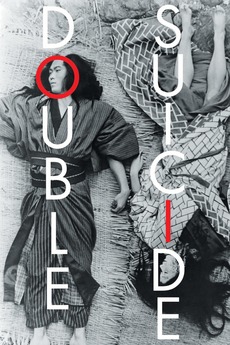
Heine, Steven. "Tragedy and Salvation in the Floating World: Chikamatsu's Double Suicide Drama as Millenarian Discourse." Journal of Asian Studies 53, no. 2 (1994): 367-393.
Heine’s article begins by setting apart love suicides from other forms of suicide and death in Japanese culture and by explaining how its definition, shinju, is in part as a result of the success of Chikamatsu Monzaemon’s love suicide plays. Heine’s work serves as an argument toward a deeper meaning to Chikamatsu’s suicide plays. While at face value, it appears that the suicide plays are a conflict between giri, the idea of civic duty and obligation to your family, and ninjo, the idea of personal obligation and passion, Heine believes it extends past this and into a discussion beyond finite realms. Heine backs his argument by providing varying levels of interpretation, but he most closely focuses on the millenarian one. Heine’s discourse delves into the possible interpretations of love suicides but goes beyond what historically a Kabuki play may have entailed. His argument is that the play requires a more nuanced approach and that it is necessary for its analysis to go beyond just giri and ninjo.
Yamagiwa, Joseph K. “Review of The Love Suicide at Amijima (Shinju Ten no Amijima): A Study of a Japanese Domestic Tragedy by Chikamatsu Monzaemon. by Donald H. Shively.” The Far Eastern Quarterly 13, no. 3 (1954): 361–63.
Yamagiwa’s fairly old review of Donald H. Shivey’s translation and analysis of Love Suicide at Amijima provides a brief overview of what Chikamatsu Monzaemon’s play consists of. Yamagiwa then proceeds to engage with Chikamatsu’s original script for the play, and examines how Shivey chose to interpret it, and how his notes complement gaps in translation. Yamagiwa comments on the difficult task of translating a text, while preserving the style and aesthetic intended by Chikamatsu. Apart from his focus on translation, Yamagiwa does provide the background for the play, mentioning what codes and morals the townsmen in the story may have been expected to adhere to. Yamagiwa’s review is unlikely directed at a general audience, and may require a higher sense of familiarity with Chikamatsu and his Love Suicide at Amijima, but it addresses the importance of translation, which is critical when delving into classical Japanese literature.
CrashCourse, “Japan, Kabuki, and Bunraku: Crash Course Theater #23,” YouTube Video, 12:38, July 27, 2018, https://www.youtube.com/watch?v=oc3dWwbctw4&t=182s.
CrashCourse’s video on Japanese Kabuki and Bunraku, both forms of theatre from the Edo period in Japan, highlights the similarities and differences between the two genres. Comparisons with the preceding style of theatre, Noh, are also mentioned, as a way to understand the targeted demographics of each. While Noh catered to the aristocracy, Kabuki and Bunraku became popularized by its relatedness, both involving every-day scenarios and appealing to the demographic to which the stories are about. The historical origin of both Kabuki and Bunraku are covered in the video. Additionally, CrashCourse videos are often known for their Thought Bubble, animated recreations of major topics, and the Thought Bubble for this video focuses on our The Love Suicides at Amijima, providing an overview of story, as well as a brief analysis to its significance in modern Japanese theatre. Though the video does not focus in its entirety on our reading, it provides a historical glimpse into how our reading differed from its time, as well as its continued influence up to this point.
TED-Ed, “Kabuki: The people’s dramatic art - Amanda Mattes,” YouTube Video, 4:15, September 30, 2013, https://www.youtube.com/watch?v=oidE2SSDczw.
The Ted-Ed video on Kabuki outlines the historical origin of Kabuki theatre. As time progresses, we are given a glimpse of the changes undergone by this genre as a result of strict government guidelines. Kabuki is compared to its preceding dramatic genre, Noh, both in terms of the demographics it appealed to, and the elements that each genre consisted of. While Noh largely focused on the usage of masks, Kabuki had at its disposal makeup, or keshou, and facial expressions. What began as an unusual dance of parodied prayers eventually evolved into a well-structured five-act play often based on Confucian philosophy. The TedEd video, though it does not mention love suicides or our Amijima play, still provides a breakdown of the critical components to Kabuki theatre. It provides information on the foundations of which the love suicide plays were constructed on.