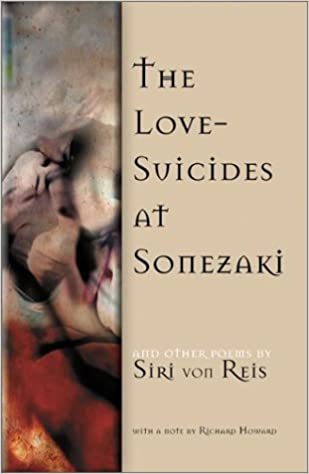
Two lovers opt for death as they find no bright future awaits them in a society that judges by social obligations, rather than human passions. Disregarded for being a shop clerk and a low prostitute, Tokubei and Ohatsu find their love caught in the strict expectations of Edo Period Japan. Ultimately, they discover that love ...
read more
Two lovers opt for death as they find no bright future awaits them in a society that judges by social obligations, rather than human passions. Disregarded for being a shop clerk and a low prostitute, Tokubei and Ohatsu find their love caught in the strict expectations of Edo Period Japan. Ultimately, they discover that love transcends the physical restrictions of their society and becomes eternalized in a single choice made by two with pure feelings.
Written for joruri (puppet theater) and kabuki by Chikamatsu Monzaemon, The Love Suicides of Sonezaki is a tragic lovers tale that evokes both sadness and thought in audiences. Although the tale follows the grievances of two lovers who are frequently met with social obstacles, it blooms into a story where nothing becomes more important than the passions of two individuals. The playwright is known for Buddhist influences in his work and he displays them through various conduits such as themes of reincarnation and karma. As a result, readers should expect characters to display thinking guided by such ideology. Despite having spiritual philosophy dispersed through the story, readers should not be deterred. Instead, audiences should view these religious implementations as a view into the popular systems of thought during the Edo period in Japan.
While it seems easy to dissect Chikamatsu’s play, it should be noted that I am reviewing the play as a written text and not as a performance. When seen as a form of theater, the Love Suicides at Sonezaki is transformed into a new experience. One is able to witness Japanese culture through fashion and music in addition to the authentic storyline when performed. As a kabuki performance, audiences can view stylized poses and backgrounds that influence how the Tokubei and Ohatsu’s characters are interpreted. Joruri may be equally as unfamiliar to western audiences in terms of storytelling, however like kabuki, the story’s unique portrayal is an artform that manages to create various perspectives of the tale. As a written work, the Love Suicides at Sonezaki uses a range of metaphors to illustrate the moments shared by the lovers. The Chanter plays an especially large role as they guide the audience in imagining the “breezes of love” and “love drowned-guests like empty shells” in the story. With eloquent words and heartrending plot, the Love Suicides at Sonezaki is great for anyone who enjoys dramatic stories, and more so for those who fall for love stories.
The Love Suicides at Sonezaki is not a happy tale, but it displays the power of love in a society which chooses to engage more in success than human passions. Whether one decides to read or watch the play, they will become enveloped in the world of Chikamatsu Monzaemon. From the roller coaster of emotions he creates through plot developments, to the way his words are translated into a flowery prose, Chikamatsu’s work is a must read for anyone who wants to experience the bittersweet. As someone who enjoys balancing romance out with sad stories, Sonezaki Shinju proves to be a satisfying read.