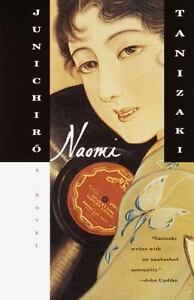
Naomi

Tanizaki Jun’ichirō


A Devil of His Own Making
jhtorres@middlebury.edu
  Reading Naomi is in no way comfortable, and yet it manages to be deeply enthralling nonetheless. Like watching a train wreck in slow motion or the 2020 presidential debate, no matter how appalled I became, I couldn’t pull my eyes away. I believe works that take us outside our comfort zone like Naomi teach ... read more


Reading Naomi is in no way comfortable, and yet it manages to be deeply enthralling nonetheless. Like watching a train wreck in slow motion or the 2020 presidential debate, no matter how appalled I became, I couldn’t pull my eyes away. I believe works that take us outside our comfort zone like Naomi teach us the most about human nature and ourselves, and for better or for worse, should be experienced.                                                                                                                                            Written in 1924, Naomi (published in 1925) frames a toxic Lolita-esque relationship between fifteen-year-old café waitress Naomi and the 28-year-old protagonist Jōji thirty years before Lolita’s publication and eventual acclaim in Western literature. What makes Naomi so perplexing is the way in which Tanizaki makes it impossible to feel truly sorry for any of the characters, as to a large extent their trials are of their own making. Jōji is enthralled by Naomi from the first time he hears her name, taken in by how it could be considered Western, and sees her as sophisticated and intelligent. Jōji is initially detestable for his grand designs to groom Naomi as an idyllic Western daughter and then as a lover, and yet one cannot help but pity him when Naomi later cruelly manipulates him.

Naomi at first appears to be a helpless child, moulded by and beholden to Jōji’s twisted desire, and yet when she develops autonomy with age we see her develop a twisted streak of her own, exerting her sexuality over him. Jōji resultingly finds himself with his head underwater and any shred of agency he had in the relationship gone. Naomi becomes a tyrant, and as she cripples Joji emotionally and financially, the ‘Western’ tendencies Jōji tried to impress on her are seen to develop a new malevolence.

Tanizaki grapples with the corrupting influence of the West felt by many in Japan at the time throughout the text, exemplifying it in Naomi. Jōji is initially pleased that Naomi enjoys the music and English lessons he pays for, hopeful he can mould her into a fine Westernised wife but it seems to have the opposite effect. Naomi starts exhibiting hedonistic behaviour, exerting what Jōji sees as her glamour and power over him. In this way we see that Naomi is a devil of Jōji’s own creation, and the Western characteristics (which drew his attraction) of Naomi’s he nurtured become his downfall.

Tanizaki is masterfully descriptive, expertly using Jōji’s deeply subjective first-person internal dialogue to drag the reader along with him, so that even if we dislike Jōji we feel his plight. The novel is a sensual experience, ranging from the sublime scenes of life in a bustling, rapidly urbanising city to nights of twisted, fiery passion between Jōji and Naomi, to descriptions of Naomi’s soiled undergarments.

            By the end of the novel it feels as if one has lived a whole lifetime in just a few short hours, and I was left reeling. It took me a while to sift through all I had just felt and all that was on display: raw lust, hopelessness, cruelty, passion, elation, servitude. This book is not for the faint of heart, but if you are willing to dance with the devil, you won’t regret it.


Total Votes : 1 Vote Up Edit Reply

Naomi: A Self-torturing Read That You’ll Never Want to Miss
Liu Yunzhi
It is no surprise that Naomi was banned halfway through its serialization even during Japan’s most unruly Taishō period (1912.7.30-1926.12.25). Besides the pedophiliac atmosphere early on when the story started with a 28-year-old man adopting a 15-year-old girl to be his future wife, Tanizaki Junichirō’s obsession with destructive sexuality, pedophilia, sado-masochism, and bizarrely complicated relationships were also ... read more

It is no surprise that Naomi was banned halfway through its serialization even during Japan’s most unruly Taishō period (1912.7.30-1926.12.25). Besides the pedophiliac atmosphere early on when the story started with a 28-year-old man adopting a 15-year-old girl to be his future wife, Tanizaki Junichirō’s obsession with destructive sexuality, pedophilia, sado-masochism, and bizarrely complicated relationships were also prominent in this novel.

Yet Naomi’s insane popularity, both among its contemporary audience and all generations ever since, including our times, can be in fact explained by how disturbing it is for many readers—it bothered me so much that I could not stand to not finish reading it.

Originally titled A Fool’s Love in Japanese, Naomi is a tale centered around the development of the relationship between Joji, the narrator, and Naomi, a cafe waitress who caught Joji’s attention with her Western-sounding Japanese name and her Caucasian-looking appearance. When Joji took Naomi home, his initial goal was to bring her up by himself so that he may turn Naomi into his ideal “great, modern woman”; yet as he gradually granted Naomi more and more freedom and eventually unconditional financial support to pursue whatever she desired, Naomi blindly rushed to “westernize” herself and freed the wild-beast in her, abandoning any moral baseline and overpowering Joji by controlling his sexual desire.

Joji as the narrator may not be fully credible, but the confession of how his libido, which can always be easily triggered by Naomi’s physical beauty, subdues all other principles in life is so genuine that it forces one to experience his abnormal way of thinking and their toxic relationship along with the narration.

Detailing how he, again and again, submits to Naomi’s reign and finds pleasure by being manipulated by her, Joji, in the meantime, acknowledges that his own consent plays the central role in such a change of power-dynamics between them. Moreover, Joji frankly and passionately tells about how he objectifies Naomi into pieces of beautiful feminine body parts and her entirety a substitute for Western women—the actual “ideal woman” which he has always longed for. And Naomi, under Joji’s depiction, is a vamp in nature, so shameless yet thanks to her beauty, still worthy of forgiving and worshipping.

Taisho period, both the times in which the story was set and when this novel was written by Tanizaki, is a period in which Japan enjoyed a complete welcoming of Western influence, in not only literature but the mundane: clothes, foods, entertainment, and thoughts. Naomi is no doubt a representative of such Westernization—this woman, far from the traditional Japanese wife ideal, goes to dances and dresses up like American actresses—Westernized, but superficial; and what such changes in appearance entails is the destruction of her morals. Joji, on the other hand, appears to be an ordinary man with an ordinary job; yet his secret fetish with Naomi’s Western physical features possibly reflects on Taisho Japan’s obsession with everything from the West, and reveals the foolish nature of such excessive affection—a blind and superficial love, also known as A Fool’s Love.

Tanizaki is surely a genius in that he makes Joji’s narrative almost a freshly written diary, engaging all to fully participate in this uncomfortable read. While you may feel bothered by it as I did, I ensure that you will still toss and turn if not finishing reading the novel—then, you know you fell into the same trap of author Tanizaki as Joji did in Naomi’s heterotopia, damned by the human impulse to submit to the exotic, the foreign, the rare-finds, the feeling of accomplishment to untangle a reading so rich with other literary references and historical/social allegories, and the secret pleasure of being tortured emotionally.

Total Votes : 1 Vote Up Edit Reply

The Cultural Identity Crisis in Naomi: To Westernize or Not To Westernize, That is The Question
nyoshida@middlebury.edu
To many Western readers, Japanese literature seems inaccessible. With strange characters and cultural references, many are deterred from picking up a book by Natsume Soseki or Ogai Mori. And while Naomi seems equally inaccessible with its unsympathetic and bizarre characters, a complete reading of the text reveals a dynamic relationship between culture and power that ... read more

To many Western readers, Japanese literature seems inaccessible. With strange characters and cultural references, many are deterred from picking up a book by Natsume Soseki or Ogai Mori. And while Naomi seems equally inaccessible with its unsympathetic and bizarre characters, a complete reading of the text reveals a dynamic relationship between culture and power that provides the reader a glimpse at Taisho Japan and its internal conflict that anyone in any time period can relate to.


Tanizaki’s Naomi follows the development of a relationship between Joji, a company man in his late twenties, and Naomi, a teenage waitress from Senzoku. The interactions between the two start as more friendly than romantic. It reads as more of a relationship between father and daughter as Tanizaki overtly implies even going so far as to have Joji and Naoi often calling each other “Big Baby” and “Papa”( Tanizaki 33). The tone of their relationship seems innocent and docile at the beginning.


Naomi begins to grow into someone that is both in accordance with and counter to Joji’s desire for his perfect westernized, but not exactly western, woman. The tone darkens in the second half of the novel and becomes more sexual. Their relationship spirals into chaos as Joji and Naomi want different things from their relationship. The book ends with Naomi as the dominant partner and Joji as a complicit enabler.


An aspect of Naomi that may deter some from reading is the rather despicable nature of the characters. There are moments where readers may sympathize with a character, but very few readers will happily relate to Naomi or Joji. Joji may be duped and deceived, but it is hard for readers to forget his aggression towards Naomi or that he is, in every essence of the word, a pedophile. Naomi, while young and allowed her faults, is petulant and cruel. These characters may speak to a reader’s shameful feelings or actions, but the book ends without redeeming any of them and makes it difficult for readers to connect with the story.


Yet, despite the disagreeable characters, the book is greatly redeemed by its cleverly written dynamic between culture and power. In Naomi, Tanizaki creates obvious references to a deeper message while leaving room for interpretation. Through Joji, Naomi, and the ever-elusive West, Tanizaki presents the reader with a conflict between traditional Japanese culture and modern Western-influenced Japan. Joji, a “gentleman” from the countryside embodies the Japan of the Taisho period. In the scene with Madame Shlemskaya and in many other instances, he wants the West but settles for his own Japanese version. “I’d be forgetting my place if I hoped for a wife with the majestic physique of a Westerner. A Japanese should marry a Japanese, I concluded, and Naomi was the closest to meeting my needs”(Tanizaki 67). He often says that his ideal partner is a Western woman, yet throughout Naomi, it becomes evident that he actually desires a Japanese equivalent. He wants a Western woman but struggles to accept the modernity of the West that comes with it. This wonderfully written representation of the conflict between tradition and modernity, Japan and the West, gives the reader a historical sense of Japan and presents something for the reader to relate to instead of the characters. In all nations, there is a cultural conflict between what has been and what is to be. What nations promote and what they desire. Japan promotes Western ideals but does not desire to be the West. This identity crisis is at the core of all intergenerational conflict and is prevalent in this era of globalization.


When reading for entertainment, people often desire books they can personally connect with. Naomi, at first glance, would not be that book. However, a deeper reading reveals a crisis of identity that all people and nations experience. Readers looking for high stakes and big adventures may be better satisfied with a Tolkien piece than this Tanizaki, but Naomi is a wonderful read for those craving a glimpse into a far off land and a deeply ingrained societal conflict.

Junichiro Tanizaki. Naomi. Translated by Anthony H. Chambers. New York: Vintage Books 2001

Total Votes : 0 Vote Up Edit Reply

Move over Lolita, It’s Naomi’s Time to Shine
efelix@middlebury.edu
There is something special about a novel that touches similar themes to that of Vladimir Nabokov’s Lolita and incorporates elements of a transitioning period. It is only natural that the reader asks what novel I am describing, and this is, of course, Tanizaki Jun’Ichiro’s Naomi. Naomi tells the story of Joji, the old male protagonist, ... read more

There is something special about a novel that touches similar themes to that of Vladimir Nabokov’s Lolita and incorporates elements of a transitioning period. It is only natural that the reader asks what novel I am describing, and this is, of course, Tanizaki Jun’Ichiro’s Naomi. Naomi tells the story of Joji, the old male protagonist, who falls in love with Naomi, the young female protagonist, at a café and follows their journey as they navigate Taisho period Japan. In this novel you will find elements of love, betrayal, and heartbreak. It is not an exaggeration when I state that this book has been robbed of the same or greater glory that Nabokov’s Lolita has gotten. For any readers familiar with Lolita many will love this book for the fact that it came nearly 30 years before and touches similar themes to Lolita. Further,  Naomi was published in Japan under the name Chijin no Ai or “A Fools Love,” and reiterates this statement throughout the tale.  Published in 1925 Naomi warns its older men of the tragedies that come with falling in love with someone significantly younger. Some might argue that this sad tale of Joji, falling in love with Naomi is representative of Japan’s submission to Western influences. Others might argue that this is reading too deep into what Tanizaki was illustrating and suggest that this story is a Japanese retelling of the Greek’s Pygmalion as we follow Joji’s narcissistic journey in crafting Naomi to be a moga, a modern Japanese woman of the Taisho period.

            When I first finished this novel, I was left with a mix of emotion. For one, I pondered why Tanizaki decided to publish a book that openly described a pedophile grooming a victim, but upon further reading, I realized that I had judged the novel too harsh—considering that I had read Nabokov’s Lolita before. This is because upon reading Naomi I came to realize that just like Lolita there was a point to be made. This point relates to Pygmalion an artist in the Greek’s tale who has his wish of bringing his perfect woman to life by the Aphrodite, the goddess of love. Just like Pygmalion, it is Joji’s narcissism that is the cause of all his misery and all who read will find this troublesome. This is because Naomi through Joji’s desires becomes too Western for Joji. The reader of this novel will find it troublesome to find a single person to blame because they will be confronted with multiple reasons for who is to blame for all the misery that Naomi and Joji go through. I stand by Joji causing his own misery per his own ego because he does after all groom or as Pygmalion shape his “perfect” woman and ultimately as the creator the blame is ultimately his.

            For anyone who has read Lolita this is a perfect read and is a useful to anyone interested in exploring how Taisho period Japanese were adopting Western culture. My favorite elements of this novel were in fact the various references to the difference in Taisho period kimonos and style. Further, the dancing scene while a little obnoxious was perfect in illustrating a Taisho period dance club. These elements provide insight into how Japan was fitting cultural ideas of the West into their own and anybody interested in Japanese history must read this book to feel an old, but crucial part of Japanese history. As for where I would rank this novel, I would place Naomi in my top 10 favorite books. I have not had a book make me feel so many different emotions upon completion to warrant a second read. I suggest anyone who has ever picked up Lolita to pick up this book because as much fun and sad as Lolita was, it simply does not compare.

Total Votes : 0 Vote Up Edit Reply

What Do We Talk About When We Talk About Love: A Review of Tanizaki Jun’ichirō’s Naomi
zhengqianl@middlebury.edu
          A western reader unfamiliar with Tanizaki Jun’ichirō’s Naomi would find its central theme echoing that of Émile Zola’s For a Night of Love. While the two works share similarities in the description of the female characters’ ruthless, sadistic manner and male protagonists’ masochistic love, Naomi’s narration blends such overarching theme ... read more

          A western reader unfamiliar with Tanizaki Jun’ichirō’s Naomi would find its central theme echoing that of Émile Zola’s For a Night of Love. While the two works share similarities in the description of the female characters’ ruthless, sadistic manner and male protagonists’ masochistic love, Naomi’s narration blends such overarching theme with an aestheticism peculiar to Tanizaki’s taste: from foot fetishism to worshipping of the woman, from the subversion of traditional East Asian ethical values to the total submission to western beauty. You would painfully yet joyously find that this tale of reversing gender power structures overturns all your established views on modern Japanese fiction, on the possibilities of gender relations and, ultimately, on love.

Writing entirely from the perspective of the male protagonist, Tanizaki Jun’ichirō’s Naomi centers around the intertwining love and hate, and dominance and submission between the electrical engineer Jōji and the coffeehouse waitress Naomi. The twenty-eight-year-old Jōji adopts Naomi when she is fifteen. From cohabitation, they go into marriage. Naomi’s coming of age is dominated by Jōji’s purposeful education—making her an embodiment of his worshipping of western civilization and above all, western female beauty. What Jōji is not aware of, however, is Naomi’s own ever-expanding craving to become a dominating, westernized, bourgeois woman. The power balance gradually tilts toward Naomi. Every conflict ends with Jōji’s compromise. Although he holds valid suspicion over Naomi’s words, he can never successfully resist her charm to a degree that he would willingly relinquish his dignity.

The reversed power relation is encapsulated in Joji’s access to Naomi’s body, especially her feet. From having full access to her feet while teaching her how to swim, Jōji ends up not even daring to give Naomi’s feet a quick glimpse. The sexually arousing feet he has seen grown up eventually trample on his dignity. He ultimately becomes the “fool” that the original Japanese title of the book Fool’s Love (痴人の愛, Chijin no ai) seems to be suggesting. While it seems that Jōji is the only fool in his relationship with Naomi, he might not be the only fool in the story. Naomi’s indiscriminating acceptance of all western values, lifestyles, and even skin color makes her another “fool” in blind love.

         In Tanizaki’s time, Naomi is a story that well reflects the historical environment: for about ten years after 1920, Japan made brief and astounding progress towards democracy. Women attained the right to vote in some areas at a time when it still seemed nearly impossible to achieve in some Western countries such as France. Culturally, Japanese women welcomed the era of the moga (“modern girl”). They began to imitate Western-style dress, etiquette, and lifestyle. In Naomi, the dance classes, balls, Western-style houses, and Naomi’s preferred dresses were all popular in Taishō Japan in the 1920s. From Paris to New York to Tokyo, the 1920s is a decade filled with a sense of hedonism built upon anxiety and uncertainty. For Japan, it is the anxiety and uncertainty brought by the ubiquitous infiltration of Western influence, the “West” that both Jōji and Naomi are obsessed with. Tanizaki’s Naomi is, thus, a fictionalized overture before the extremes of history meet: the frenzied craving for western civilization in the 1920s soon turned to its own opposite of ultra-nationalism and ethnocentrism only a few years later.

         Yes, to a 21st-century reader, the misogyny and objectification of women that Naomi features on almost every other page make us frown. Naomi is still looked at from a man’s eyes in a patriarchal society, shaped by a man’s sexual fantasy and desires, and deprived of her own voice. All of these unsatisfactory traits seem to make the novel less of a worthy reading. However, just as how the audience would hate a good actor whose excellent play of a villain leaves an indelible impression, Tanizaki’s Naomi marks a great attempt to explore an extreme version of love, with a style of writing explicit in both virtues and vices. So don’t read Naomi, unless you are curious to know what love can ultimately be and how it leads to a total destruction of dignity.

Rating 5/5

Total Votes : 0 Vote Up Edit Reply

Japan’s cultural confusion during the Taisho Period revealed in Tanizaki’s Naomi through masochism, fetishization, and manipulation
ejkim@middlebury.edu
Many readers (including me) hold a preconceived notion that strong female characters are not evident in older pieces of literature; rather, we usually see female characters in positions of inferiority and submissiveness. Although the latter statement rings true, Junichiro Tanizaki’s Naomi is a literary masterpiece that reveals a man’s obsession and misery, a woman’s increasing ... read more

Many readers (including me) hold a preconceived notion that strong female characters are not evident in older pieces of literature; rather, we usually see female characters in positions of inferiority and submissiveness. Although the latter statement rings true, Junichiro Tanizaki’s Naomi is a literary masterpiece that reveals a man’s obsession and misery, a woman’s increasing agency, and Taisho Japan’s cultural confusion.

In Tanizaki’s Naomi, Joji (the protagonist) is in his late twenties at the start of the story and seems to be a gentleman with good manners, while also being capable of maintaining a proper filial relationship with his mother. Naomi, a 15-year-old waitress whom Joji meets in a café, enthralls him with her Western-sounding name and her oh-so-stunning beauty that separates her from others. The girl is poor, but Joji falls in love with her and aims to shape Naomi into a “perfect” woman (ugh, disgusting). Pedophile alert! And oh, does this ring a bell to any Greek mythology fans out there? Joji’s relationship with Naomi is pretty synonymous with that of Pygmalion and his creation, Galatea! Anyways, allow me to proceed.

In hopes of creating his ideal woman, Joji westernizes Naomi and showers her with paraphernalia (like odd kimonos), and gives her money for English and voice lessons. As the plot develops, the former “Big Baby” and “Papa” relationship between the two characters dissolves, and Naomi begins to use her manipulative character to take control of Joji. They share sexual intimacy, but similar to Victor Frankenstein who was destroyed by his creation, Joji finds Naomi’s word quickly becoming a directive that he must follow. However, Joji still does not leave her—which shifts the former theme of obsession to masochism. This is where the Japanese title of the novel, A Fool’s Love, makes a pretty darn obvious appearance!

When I read this story at face value, I couldn’t stop thinking about how grotesque their relationship was and how awful they were as humans (although fictional). However, I have to applaud Junichiro Tanizaki for really squeezing out his creative juices to use Joji and Naomi to represent Taisho Japan during its period of rapid westernization. Tanizaki uses Naomi to represent Taisho Japan and its desire for the westernization and modernization of the nation. Joji’s misery can be regarded as the effects of the West’s corrupting influence on Japan.

If we look at Taisho Japan, we can clearly see the uh-oh-things-are-going-south effects of rapid modernization—like poor living standards in crowded cities and the loss of Japanese identity. To counter the loss of the nation’s cultural confusion, loyalty to the emperor as a center of national identity was huge. Maybe this is how Japanese nationalism came about—from traditions of superiority and cohesion. This, in turn, may even lead to Japanese nationalism—one of the many factors that may be keeping the Japanese government from offering a sincere apology regarding the comfort women issue. Basically, there are a number of scenes in the novel (no spoilers) that suggest Japan, like Joji, has fallen head over heels over a false view of Western culture—a state that can only result in great frustration, disappointment, and turmoil.

Now, should you read it? You definitely should! On a scale of 1 to 10 (1 being “it’d be better off collecting dust on a bookshelf” and 10 being “why the fudge nuggets did you not read it yet??”), I’d give it a good 8.625. Although the novel was limited to Joji’s perspective, it was refreshing to see a strong female character in an older piece of literature. The topic of fetishization and foolish obsession over a 15-year-old girl is disturbing, but if you’re really thirsty for a novel involving pseudo-pedophilia, dive right into this book! Additionally, I found the novel’s linkage to the rapid modernization of Japanese society from the late 1910s until the middle 1920s fascinating. You won’t like the characters, but you’ll really appreciate the literary artistry of Junichiro Tanizaki! Definitely a page-turner!

Total Votes : 0 Vote Up Edit Reply

A Walk in the Lost Paradise
xiyaoh@middlebury.edu
Distorted yet alluring, tragic yet perplexing—Junichiro’s Naomi is such kind of book that startles and unsettles its readers. It presents to us a lost paradise where predators hunt on their prey,  and raw lusts vigorously bloom as well as paradoxical motives. Once we set foot on it, a dangerously captivating journey begins.  Written in 1924 ... read more

Distorted yet alluring, tragic yet perplexing—Junichiro’s Naomi is such kind of book that startles and unsettles its readers. It presents to us a lost paradise where predators hunt on their prey,  and raw lusts vigorously bloom as well as paradoxical motives. Once we set foot on it, a dangerously captivating journey begins. 

Written in 1924 and originally published in 1925, it depicts the crooked entanglement between Naomi and the narrator Joji, where the latter tempts to tame and guide the former, but ultimately falls into the trap of her manipulation. Despite 13 years of age difference, Naomi’s westernized appearance and temperament strongly corresponds to Joji’s admiration of the occidental world, for he is rooted in traditional Japanese cultural background which he eagerly wants to evade from. Therefore Joji starts raising and training Naomi in hope of transforming her into a role model of his Western ideal. Nevertheless, as they get married and their relationship mutates into erotic romance, Joji’s financial devotion and efforts also feed into Naomi’s growing desire for material as well as her hedonist spirit; her robust vigor and arrogance gradually overpower Joji, depriving him of dominance. Eventually, Joji fails to quit his obsession with Naomi but becomes a submissive slave for her, kneeling heart-and-soul in front of her tyrannical orders as their marriage persists. 

Unlike normal novels, it is extremely hard to find any character in Naomi linearly likable—rather, one would discover them complex and pitiful, and their destinies contemplation-provoking.  This is because Junichiro has adopted the perspective of Joji for narration and adeptly played with the unreliability of the first-person point of view, blurring the objective reality while engaging readers deeply into Joji’s subjectivity. The moment readers start to trace Joji’s confession, we are no longer neutral bystanders of the text, but invited to closely sense and perceive the nuanced dynamics of Naomi and Joji’s relationship: the way pure, reserved crush transformed into devouring desire and blind passion, the reason of Joji’s loss of power and Naomi’s gain of arrogance (which is filled with absurdity and inferiority), as well as the obscure boundary between rationality, reality, illusions, and fanaticism. In this sense, readers liberate themselves from ethical judgements as the paradox of being is revealed, and a series of philosophical interrogation arises: Are the characters’. initiatives justifiable? Does love really exist between Joji and Naomi, or Naomi and her men? Ultimately, such confusion leads to the quintessential doubt of the genuine definition of love, which we see in this book as disguised under kaleidoscopic names: eroticism, passion, financial reliance, gratification of desire, even masochism…

Additionally, as a book of fiction, Naomi satiates readers’ senses with exquisite literary aesthetics. Junichiro embellished the physical space in the text and incorporated objects as symbols; not only are the depictions artistic in composition, but their profound implications of the characters’ persona as well as foreshadowing certain tragicness are also extraordinarily delicate. The ethereal architecture of Naomi and Joji’s house is a perfect example, as it manifests a sense of idealistic beauty that resides above worrisome instability and previous failure, connoting the inferiority of Naomi and Jojis’ romantic relationship and foreshadowing the doom of their temporal happiness. Another example would be Junichiro depicting Naomi as fanatically enthusiastic for the flamboyant compilation of colors and gorgeousness though her love for flowers. This part remains one of my personal favorites, for the ephemeral nature of flowers is again connected with the fleeting purity and harmony in Joji and Naomi’s relationship, implying an unspoken tragic beauty of decadence. For literature lovers, Junichiro has therefore weaved a marvelous textual network that waits to be appreciated and deciphered. 

Further, there lies in the novel an intriguing tension between concrete individuals and general ideology, rendering the text epochal significance and universality of Japanese psyche. The fact that the plot is centralized in Joji and Naomi’s idolization of the West, and that the imitation project has failed, proposes a bitter mockery and an incisive reflection of an oscillating period of Japan under the invasive influence of the West. In this sense, the characters are accredited with macroscopic connotations where Joji symbolizes Japanese ideology and Naomi the chaotic society under transformation, and the tension between them terrifyingly permutable and intense, for, as above mentioned, we cannot even distinguish in the end whether the figure of Naomi becomes a perfect projection of Joji’s expectation.

Overall, Naomi is definitely not an amiable leisure to read, nor is it a simple work depicting obscenity. Rather, it possesses such bizarre charm that stuns, shocks, and challenges the readers—only those with exquisite literary taste and are prepared to face a world full of desires, selfishness, obsession, dishonesty, vanity, and ultimately, bewilderedness. It invites all who are courageous and reflective to a walk in this lost paradise, where a perpetual discourse of the reformation of cultural ideology and the ultimate quest for love awaits.

Total Votes : 0 Vote Up Edit Reply

Madly in Love: A Review of Junichiro Tanizaki’s Naomi
jenglish@middlebury.edu
In the early twentieth century, D.H. Lawrence, one of Britain’s preeminent authors, faced censorship, official persecution, and a reputation as a pornographer that followed him until his death for writing about sexuality. Across the globe in Japan, Junichiro Tanizaki explored sexuality and eroticism to similar effect. Tanizaki’s Naomi follows the relationship between Jōji, an electrical ... read more

In the early twentieth century, D.H. Lawrence, one of Britain’s preeminent authors, faced censorship, official persecution, and a reputation as a pornographer that followed him until his death for writing about sexuality. Across the globe in Japan, Junichiro Tanizaki explored sexuality and eroticism to similar effect. Tanizaki’s Naomi follows the relationship between Jōji, an electrical engineer living in Tokyo, and Naomi, his wife over a decade his junior. Jōji first set his eyes on Naomi when she was fifteen and working at a café, and struck by her beauty, takes her in with the intent of marrying her. He strives to mold Naomi into his ideal women, funding her education, and cultivating in her the values he believes a modern, Western woman should have. Jōji is our protagonist and narrator, and Naomi is the disturbing and mesmerizing account of his relationship with Naomi.

Jōji obsesses over the West, and in particular, Western beauty. His fascination with Naomi stems from her “Eurasian” features. Encouraging Naomi to be as Western as possible, Jōji pampers her and fuels her ever-growing appetite for clothing, food, and dancing. They move into a Western-style home, look down upon Japanese features, and fetishize anything Western. Jōji, fixated on Western beauty, and Naomi, filled with vanity due to her Eurasian appearance, have a marriage characterized by craving that can be described as anything but healthy. There is an extreme tension between the two of them, and Jōji is whiplashed between his outlandish expectations for Naomi’s abilities and behavior and his overwhelming infatuation with her appearance.

Jōji mentions his “readers” at various points, which establishes Naomi as a frame story. The story often reads like a confession, and Jōji even directly describes it as such, recognizing his own depravity. The Japanese title, 痴人の愛 (chijin no ai, “Fool’s Love”[1]), reflects the ridiculous nature of Jōji’s obsession, and emphasizes the overwhelming nature of the allure that he feels toward Naomi. This all combines to make Naomi read as Jōji’s retelling and rationalization of what has happened between him and Naomi.

In Naomi, Tanizaki Junichiro wrestles with and reflects on Japan’s rapid Westernization during the Taisho period. Tanizaki places issues surrounding modernity, sexuality, materialism, and the role of men and women in society at the very center of the novel. That being said, the novel is not ham-fistedly didactic; Jōji and Naomi do not ever feel like mouthpieces for Tanizaki, but rather representations (or even caricatures) of a certain Japanese subculture at the time. Descriptions of city night life and the fashion of the time are vivid and colorful, creating an exciting backdrop for the story. The setting plays an important role in the story, and adds another layer of complexity to Jōji and Naomi’s relationship.

Naomi was gripping and compelling, but by no means an enjoyable or pleasant read. Almost all of the characters are deplorable, but this is part of what makes Naomi so trenchant. It exposes us one face of Japan during the Taisho period: Jōji and Naomi reflect the mindset of the modern boy (mobo) and modern girl (moga) of the time. One can find many parallels to the American flapper movement of the 1920, and Taisho Japan contrasts starkly with the militarized, nationalistic, anti-Western Japan of only a few decades later. For those who have read Madame Bovary or Lolita, Naomi will feel somewhat familiar.

Should you choose to read Naomi, be prepared to encounter a lot of uncomfortable scenes, many of which are pedophilic in nature. The novel focuses on sexual desire. In that sense, its frank descriptions of sexual desire and sex are rather modern. However, Jōji is obsessive and at times predatory, making his monologues often perturbing. It is morbidly fascinating to read about Jōji’s obsession. His feelings are so extreme you might sometimes find yourself laughing, but it is precisely the ferocity of his depravity that drives the novel. The subtle posturing he and Naomi do is like a dance, and watching them stumble, lead the other, and fall is engrossing. Tanizaki does a wonderful job conveying the intensity of their emotions, and by the end of the novel, the complicated and deeply human relationship remains full of mystery, leaving the reader with a lot to consider. Naomi is a bold novel, and stands out as truly modern.


[1] Japanese does not distinguish between the singular and plural in the same way that English. Accordingly, the title could be referring to several fools potentially.

Total Votes : 0 Vote Up Edit Reply

A Fool’s Read: How Junichiro Tanazaki’s “Naomi” Flips the Paradigm but Feigns its Progressiveness
lwynne@middlebury.edu
Jun’ichirō Tanazaki, born in 1886, came of age on the cusp of a pivotal transition in Japanese culture. At the advent of the Meji era, Japan, no longer clinging to isolationism, began to readily adopt Western theory and technology. The dawn of the Taishō period in 1912, however, saw the voguing of Western lifestyle and ... read more

Jun’ichirō Tanazaki, born in 1886, came of age on the cusp of a pivotal transition in Japanese culture. At the advent of the Meji era, Japan, no longer clinging to isolationism, began to readily adopt Western theory and technology. The dawn of the Taishō period in 1912, however, saw the voguing of Western lifestyle and aestheticism in earnest. Western clothing, cinema, music, dances, celebrities, and beauty standards began to dominate Japanese popular culture and this widespread assimilation threatened to fling the country into a precarious crisis of identity. It is amidst this tumult that Tanazaki, now enshrined in Japan’s literary cannon as one of the nation’s most prolific and influential authors, wrote Naomi.

Well actually, the focal character, Naomi, only lends her name to the English version; the novel’s original Japanese title roughly translates to A Fool’s Love. I believe that this latter title much more aptly describes its contents, as you would be foolish to love this novel. To put less harshly, I believe that while a reader may enjoy Naomi for its historic reversal of expected power dynamics, the novel puts forward more of a cautionary exposé on the dangers this upheaval poses towards the patriarchy and is furthermore frustratingly reductive in the way it caricaturizes the newly minted Taishō woman.

The novel begins when the narrator, twenty-eight-year-old Jōji, a self-described "gentleman," takes interest in a fifteen-year-old, Eurasian-looking café waitress, Naomi, whose name infatuates him with its foreign sound. He soon makes a proposition to her, agreeing to pay for her education, tutoring in English and music that would have otherwise been unaffordable given her waitress-wage and low birth, on the lone condition that she moves in with him. Though initially he claims his intention is purely to act as a fatherly provider, we quickly see that he is in fact grooming Naomi to take as his future wife (and I suppose we shouldn’t be so surprised since he foretells as much on the first page). Thereafter, Jōji reenacts the Greek myth of Pygmalion, falling in love with the statue of Naomi that he meticulously attempts to carve into his ideal Western woman. Naomi refuses to be sculpted, however, and deviates from Jōji’s intended path ­ (or perhaps rather she adheres to it but in unanticipated ways that beget unforeseen consequences).

Naomi refreshingly subverts long-established gender expectations; she eschews the duties and inhibitions of a traditional Japanese housewife and asserts control over Jōji in order to finance her own self-actualization. In stripping Jōji of his power and dignity, she reverses the conventional husband-wife dynamic, and renders him the titular “fool” of the story. Ultimately however, the novel does not empower Naomi so much as it actually critiques the dangers of female empowerment by using Jōji’s devolution as a cautionary tale.

One need not look far to see why any feminist reading of this text is dubious. The obscure 20's Western actresses referenced ad nauseum (Mary Pickford, Annette Kellerman, Pina Menichelli, Geraldine Farrar, Pola Negri, Bebe Daniels, Gloria Swanson) far outnumber the other female side-characters in the story, and the novel as a whole spectacularly fails the Bechdel test (A metric for female representation in fiction in which all a novel must do to “pass” is to have two female characters engage in dialogue about anything other than a man). Indeed, Tanazaki fails to holistically address any aspect of the Taishō period’s radical expansion of female freedom apart from its effect on their relationships with men.

Though Tanizaki’s perspective on this emergent phenomenon of the so-called moga (a Japanese portmanteau of “modern girl” borrowed from English) must hold a degree of credence given his immersion in their favored haunts (the social dancing and café scene), if he intended to use the focal character of Naomi as a synecdoche for all moga, then this account seems severely limited in its illuminative capacity. Perhaps one would be better served by reading a woman novelist such as Taiko Hirabayashi and Toshiko Tamura, to gain a more faithful insight into the actual lived experiences of these modern women. Whereas Tanazaki paints a picture of unabashed hedonism, promiscuity, and manipulation the two aforementioned woman novelists present accounts of survival, stigmatization, and subjugation; because of the radically different approaches taken by these authors to confront the same subject, I would suggest that anyone who reads Naomi balance out their literary diet with a healthy serving of a female narrative from the same era.

One might deem it unfair and unproductive to scrutinize an early 20th century text through the lens of modern feminist theory, and they may be right­; after all, what piece of fiction from this period isn’t problematic in some way? I believe that in this case my criticism is warranted, however, as the subject matter of Naomi is precisely that of a modern woman’s liberation from her historically domestic cage; Tanazaki is basically asking for a feminist critique. Despite the novel’s most significant redeeming quality, its dramatic (and often humorous) power dynamic reversal, I think it’s fair to say that Tanazaki’s portrayal of a new age of female empowerment leaves a lot to be desired.


Tanazaki, Junichiro. Naomi. 1924. Translated by Alfred Knopff. Random House: 1985.

Total Votes : 0 Vote Up Edit Reply


jhtorres@middlebury.edu
Naomi Question: From early on in the novel, Naomi is portrayed as the personification of the growing and developing taste for Western culture in Japan during the Taishō period. During their nighttime boat rides, she sings "Santa Lucia," a Neapolitan song, over and over. While we know that Western art and culture became popular in Japan during this time, was there a resurgence of traditional Japanese culture or a merging of the two cultures?

rherman@middlebury.edu
Throughout the novel, Joji appears to both openly objectify Naomi while also supporting her education, submitting to her desires, and encouraging her independence. How does this dynamic reveal the evolution of male-female relationships during the Taishō period as a result of western influence? Does Tanizaki view the increased independence of women as positive or harmful?

zhengqianl@middlebury.edu
Junichiro’s Naomi as a whole seems to perpetuate a binary opposition between “the Western” and “the Japanese”, both of which possess corresponding values that oppose one another. Whereas westernized Naomi looks Eurasian and is full of autonomy, Joji’s passivity seems typically Japanese given the historical context. Could we interpret the western influence on Japan through a post-colonial lens? Could Joji and Naomi’s lives be seen as mimicking the western culture?

nyoshida@middlebury.edu
What is the importance of the change in Naomi's demeanor? What is Tanizaki saying about the west through the transformation of Naomi? Is it a positive or negative message?

efelix@middlebury.edu
Is anyone else saddened by Joji's character, especially as we see Naomi manipulate him more and more? It seems like Naomi is the looming Western world onto Japan, represented by Joji.

ejkim@middlebury.edu
From what we've read so far, what might the book reveal about Japan in the 1920s, power relations between the genders, the psychology of the relationship between Joji and Naomi, body fetishization, and the reconstructing and rethinking of bodies in Japan? This book was published in the midst of a radical shift in Japanese culture from the traditions that had governed their behavior for centuries to a more westernized version. How do you think Junichiro Tanizaki's book impacted Japanese women who were just beginning to reject the traditional housewife role and embrace the Western idea of female freedom? Do you think this book has to do more with the tale of obsessive love (or lust) between Joji and Naomi, or do you think it's more fitting to describe this work as an allegory about the changes that Japan was facing after WWI and their obsession with western things?

xiyaoh@middlebury.edu
I found Junichiro’s depiction of space intriguing. His description of “the house of fairy tales” appears to be especially metaphorical and connotative (to me it is almost like a falling hetero-topia), manifesting a sense of Junichiro’s unique aesthetics. How does the construction of space facilitate our understanding about the persona of the characters and reflect underlying tension (if you perceive any)?

agclay@middlebury.edu
What does "Naomi" say about constructs about friendship in the Taisho Period, and more specifically, about friendship between men and women? (Hamada, Kumagai, etc.) I am interested in what constructs of friendship like throughout other periods in Japan as well.

Liu Yunzhi
Naomi in this novel is the representation of Western power and Joji the Japanese. Yet Joji's total awareness of Naomi's true nature and his disapproval of her soul does not hinder his fascination toward Naomi at all. His obsession with Naomi's "western" physical beauty overpowered everything else, and he ended up becoming the subordinate in their relationship, submitting to the rule of the ill-behaved, vain, brutal Naomi. Can we then infer something about Tanizaki's view on the total acceptance of the West in Taisho, and his understanding of the Japan-West power dynamics from Joji's paradoxical fascination? How should we interpret the Japanese title, "Love of A Fool"?

jenglish@middlebury.edu
The Japanese title of the novel is 痴人の愛 (chijin no ai), which translates to something along the lines of, "Fool's love." Japanese does not distinguish between the singular and plural as much as English does, meaning that the title could be referring to one or more people. Based on what you have read so far, who do you think the titular fool(s) is? Naomi? Joji? Would your answer change depending on the point in the story?

cdramos@middlebury.edu
the motif of flowers is very strong throughout; on page 15, young Naomi is depicted as having a love of them, especially tulips, and "violets, dandelions, lotus grass... primroses." Red tulips mean perfect love, and tulips in general can mean rebirth or charity (or at least it did in Victorian times). Violets are associated with purity and modesty, while dandelions are equated with faithfulness. To what extent does their relationship embody these values, and to what extent does it not? Are the flowers supposed to symbolize the strength of their love, or the opposite?

mkemmer@middlebury.edu
Naomi Question: Throughout Naomi, there is tension stemming from the concept of westernization. In the context of the novel, does “westernization” necessarily imply “modernization”? If or if not, how so?