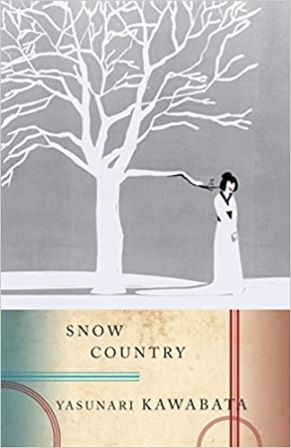
Snow Country, by Yasunari Kawabata, shows off its author’s mastery over imagery and symbolism to create mood. Although it is a story about Shimamura, a young and wealthy heir, and his love affair with a hot spring geisha, Komako, it is easy to get lost in the snow tunnels, cedar groves, and kotatsu* ...
read more
Snow Country, by Yasunari Kawabata, shows off its author’s mastery over imagery and symbolism to create mood. Although it is a story about Shimamura, a young and wealthy heir, and his love affair with a hot spring geisha, Komako, it is easy to get lost in the snow tunnels, cedar groves, and kotatsu* that provide a backdrop for the characters. Shimamura hurts Komako time and time again by leaving her to return to Tokyo and to his wife and family, lying to her, and becoming enamored with the girl mysteriously always at her side—Yoko. Thankfully, due to the ethereal, otherworldly scene Kawabata sets, none of this drama comes off as cheesy.
Yoko, my favorite character, is at the center of this otherworldly motif. She never says much, but descriptions of her youthful joy, singing, and care for others like her brother and the ailing Yukio made her seem almost out of place in a story largely centered around Komako and Shimamura’s tragic romance. While Komako is clean, mature, and alluring in her warmth, Yoko is cold and refreshing like the mirror filled with mountain snow Shimamura sees every time he looks at her. From a Western point of view, the story takes place far away, both temporally and spatially, and yet I could not help but sympathize with Komako’s plight—a woman whose talents, beauty, and love are wasted in her current occupation as a geisha in a small town and in her current relationship with Shimamura.
In fact, some of my favorite parts of the novel are scenes in which Komako is grappling with her fate as the mistress and as everyone’s second choice. For example, she repeatedly calls Yoko insane when she herself is hiding in closets, constantly leaving her job, and even abandoning a man on his death bed in order to meet with Shimamura. It is obvious to everyone in the town how deeply she cares for a man who does not fully reciprocate her passionate feelings, yet she cannot help herself. The humanity and warmth Komako bring to the story are a pleasant contrast to Yoko’s cool and otherworldly nature.
My only criticism of this book is its slow pace. It is very possible that the pacing was a conscious choice by Kawabata, a poet at heart, but it left me wanting. The plot takes place over several years, and the abrupt climax toward the end left the story feeling unresolved. That being the case, I would recommend this book to poetry lovers and students of Japanese culture or literature more than to the casual reader. Additionally, if I were to rate the novel, I would give it four out of five stars—I might have rated it more highly if I were able to read and fully appreciate the original version, written in Japanese. Much of the nuance, double-entendres, and more obscure allegories or literary devices of the original version must have been lost in the translated version. Overall, however, I felt that I was successfully transported to another world while reading and that the words on the page were painting literal pictures in my mind as I read them, making for a very enjoyable experience.
*kotatsu-A charcoal brazier covered by a wooden frame and a quilt; the only heating
device in the traditional Japanese house.