The Women of the Radiant Prince
Widely renowned as the world’s first novel and a cornerstone of Japanese literature, Murasaki Shikubu’s (c. 973 or 978 – c. 1014 or 1031) The Tale of Genji delivers a unique portrayal of the rigid yet complex lifestyle of Japanese nobility during the Heian Period (c. 794 – 1185) The tale centers around the Radiant Prince––Genji––and all the amorous escapades throughout his lifetime. In Japanese history, The Tale of Genji was praised by scholars as an exemplary collection of waka––a Japanese poem containing 31 syllables, finding value in what it offered didactically for literary composition and the role of women. Modern reexaminations of the tale, however, acknowledge that another aspect that sets The Tale of Genji apart from other literature in this time period is the psychological nuance of the characters within the story.
The capacity of the characters to adapt to events and situations allowed a narrative in the form of a novel to take shape. For instance, while Genji’s inclination towards lustful romance remains a constant throughout the story, we see the all the subtle ways in which his various experiences with death, longing, jealousy, and unrequited love influence him and his decisions. Not just Genji, but all the characters in the tale are dynamic. This is why Genji’s principal counterpart in the tale, Murasaki, takes the spot as the story’s most fascinating character for me. Forcibly taken in by Genji at a young age, we are able to see all the compelling and tragic ways in which Murasaki changes throughout her life as she transitions from daughter to lover to wife. Ultimately, The Tale of Genji combines prose and poetry to present a credible representation of the human condition in Heian Japan.
What I appreciated most in The Tale of Genji was the mastery of language and beautiful imagery within its poetry. When thinking back to the tale, I always find myself visualizing images: a molted cicada shell, wet sleeves, evening dew, radiant moonlight. What drew me into the story was the profound and poignant connection to nature. However, though I could admire The Tale of Genji’s aesthetic descriptions, I constantly felt a sense of disconnection from story and the characters. Feelings of grief, regret, and longing were relatable to me, but for the most part I felt like I was watching the story unfold, as opposed to being swept up in it. This isn’t necessarily a criticism, but more so an acknowledgement of the necessity of separation with the story, given the various differences between Heian Japan and modern day. There were many times where a particular event in the story––instances of sexual harassment and assault, or adherence to strict social conventions––shattered any sense of personal immersion in the tale. More often than not, I found myself rooting against Genji and would feel disappointed time and time again whenever women yielded to his amorous proclivities.
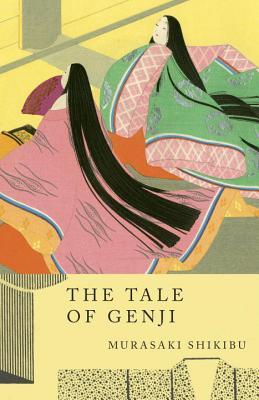
The Tale of Genji became far more interesting to me when I stopped viewing it as a story of the Radiant Prince, and instead as the story of his women instead. Adopting a wider view, I realized that the people changing most were the women in the tale. Genji goes through a lot––the death of his spouses, suffering from vengeful spirits, being exiled––but his actions show he mostly stays the same playboy the whole time. On the other hand, women like Murasaki, Fujitsubo, the Rokujo Lady, Aoi, and the Akashi Lady are forced to adapt to their circumstances after yielding to Genji. They experience Genji’s fleeting affection, relocation from their homes, jealousy and anger towards other women, and overall change in ways that Genji doesn’t. My favorite parts of the tale are the moments in which I can clearly see how and when characters have changed, for the better or worse, after interacting with Genji. To me, the protagonists of the story are the ensemble of women in the tale.
While The Tale of Genji has a lot to offer, I wouldn’t recommend it to the average reader. First off, the tale is not necessarily an enjoyable read per say, but a more mind-provoking one. In other words, there are issues and events in the story that will make the reader think, but not necessarily engage or excite them. Given the length of the piece, this could present an issue to many readers. Additionally, The Tale of Genji also touches on a number of uncomfortable topics––by modern standards––in potentially insensitive ways. Thus, it is important for any reader of the tale to have an idea of the context and social conventions of the Heian period to fully grasp the story. It would be beneficial if readers have something to pay attention to while reading the story to stay engaged, whether it be the lifestyle of the nobility, the descriptive language in waka, major themes that continue to exist in modern times, or the women in the tale.
If I were to rate The Tale of Genji, I would evaluate it by two standards: enjoyability and didacticism. For the former, I would give the tale a two or a three out of five. Personally, I didn’t really feel satisfied when reading story. Most times, I would find myself criticizing the characters and customs of the time period, unable to disregard the problematic qualities present. For the latter, I would give the tale a five. There is an abundance of aspects of the story to analyze and learn from as a piece of literature, a glimpse into history, and an exploration of the human condition. It may be a bit of a dense read, but if you are truly interested in learning about the Heian period and the origin of various themes prevalent in modern Japan, I would definitely recommend The Tale of Genji.