ReadMidd

A book club for our course, our college, and our community.

"Reading makes immigrants of us all. It takes us away from home, but more important, it finds homes for us everywhere."

Jean Rhys

Our Project

ReadMidd is a book club/ book review website that the class of Modern Japanese Fiction (JAPN 215, Fall 2020) and Sex and Death in Classical Japanese Culture (JAPN 221, Fall 2021) worked on together as the final class project. Integrating all major assignments and activities during the semester – from books reviews, to reading questions, supplementary research materials, and critical engagement with secondary sources and with peers – ReadMidd will hopefully become not only a valuable portfolio-building tool, but also a platform that we can later share with the other students in the Japanese Studies Department and, beyond that, with the entire college community.
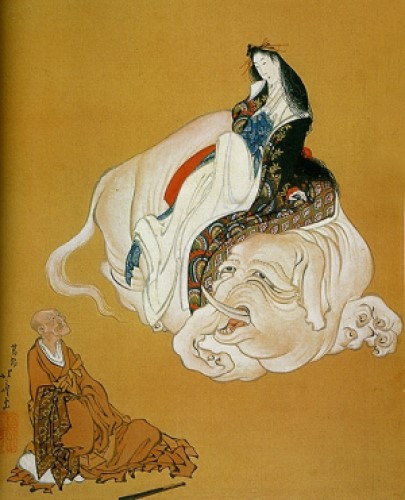


The Woman of Pleasure at Eguchi

Test
omilutin@middlebury.edu
Test

The Breast

The Breast: A movement that cannot be imprisoned
ayepizmedina@middlebury.edu
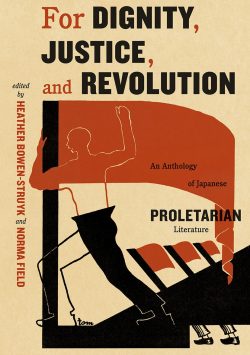
  Miyamoto Yuriko, a notable writer who faced incarceration herself for supporting the proletarian movement along with her husband, appears to have expressed some of her personal life in “The Breast”. As she had done with other short stories, “The Breast”  written in 1935, addresses Japan’s class inequality and proletarian sentiments during a time when labor unionists and activists were being incarcerated for fighting and working toward changing the political system that favored the bourgeois. This story is centered around ...

The Three Crabs

The Three Crabs: A Woman Letting Lose
mmflores@middlebury.edu
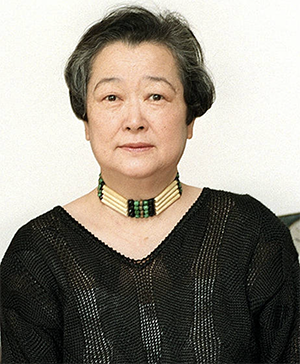
Oba, Minako. “THE THREE CRABS.” Japan Quarterly 25, no. 3 (1978). Accessed May 26, 2022. ProQuest.  “The Three Crabs” is written by a Japanese author named Oba Minako. Oba Minako was born on November 11, 1930, and is known for creating stories that challenge traditional familial roles.  The main character of “The Three crabs” is a woman named Yuri. We first meet Yuri when she is walking along the beach. The story then continues with Yuri making a cake with ...

Ants Swarm

Literary Masochism: A Dominance
sabrinak@middlebury.edu
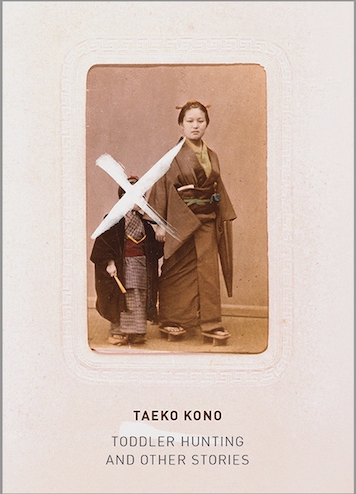
Kōno Taeko is considered as one of the most famous Japanese women writers in the nineteenth century.  Born in 1926, in Osaka, Japan, Kōno grew up during the war.  One can tell how much impact the war had on her and her writing as she wrote many gruesome texts that can be seen in her collection of short stories, Toddler Hunting and Other Stories, which she wrote in 1996.  Specifically, “Ants Swarm”, a chapter in the collection, is where Kōno ...

Delilah

“Delilah:” The Furthest Thing From Flowery
egavin@middlebury.edu
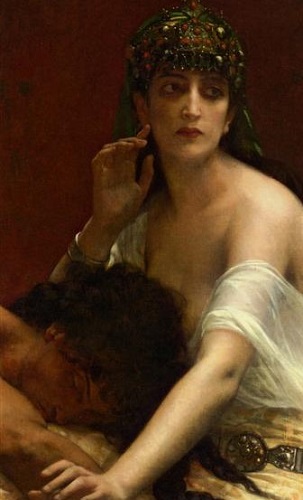
Kanehara Hitomi’s “Delilah,” tells the story of a woman’s experience with starting a new job at a bar. In the story, the main character, Yu Kanda, deals with problems in her new workplace because of how she was treated by the men working there. Here are two examples of issues that Kanehara integrates into her story, one of which is much tamer than the other. One of these is Yu Kanda’s work uniform. Kaizu, one of the other workers at ...

Kitchen

Forget the Are they Couple? I am in love with Eriko
mgromero@middlebury.edu
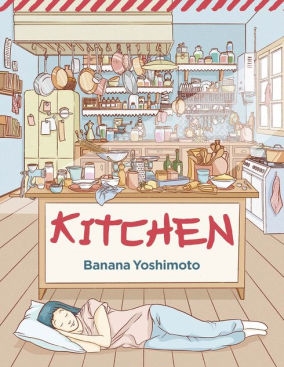
“I am beautiful! I am dazzling!… Believe in the me that you knew (Kitchen, page. 49).”  Grief is painful, and strange, and paralyzing, and confusing, and long. It drives you to lay around and do nothing, stare at the wall, and have no thoughts as the light outside disappears as it does in your spirit. Banana Yoshimoto’s Kitchen () is a story of how a young woman, Mikage, processes this overwhelming grief. She finds the kitchen as her only place ...

Two Grave Markers

Hibakusha - From Life to Page
ttanchanco@middlebury.edu
Hayashi Kyoko’s “Two Grave Markers” is a genbaku bungaku (literature discussing the atomic bombing of Japan) written in 1986 that tells the tale of Wakako and Yoko, two young women who died from the atomic bombs. They are depicted as two best friends who come from a small village far from Nagasaki, and were factory workers in Nagasaki at the time of the bombing. Shortly after the bombing, Wakako (with no physical damage but sick with radiation poisoning) returns to ...

The Smile of the Mountain Witch

Reimagining the Yamauba
soteng@middlebury.edu
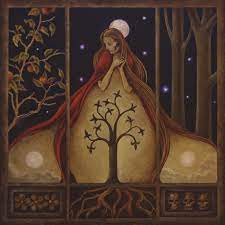
Born in the 1930s Oba Minako witnessed the mushroom cloud of the atomic bomb. Even when fleeing from World War II air raids to safety, tucked under her arm was a book. Her intensive reading developed her love for writing. After marrying Oba Toshio, she lived in Alaska for 11 years. Being able to leave Japan’s controlling views on women, she was exposed to new teachings and ideologies. Oba’s “The Smile of a Mountain Witch” which was published in 1936, ...